


















Trump’s Tariffs and U.S. National Debt: The Risk of Last Hope
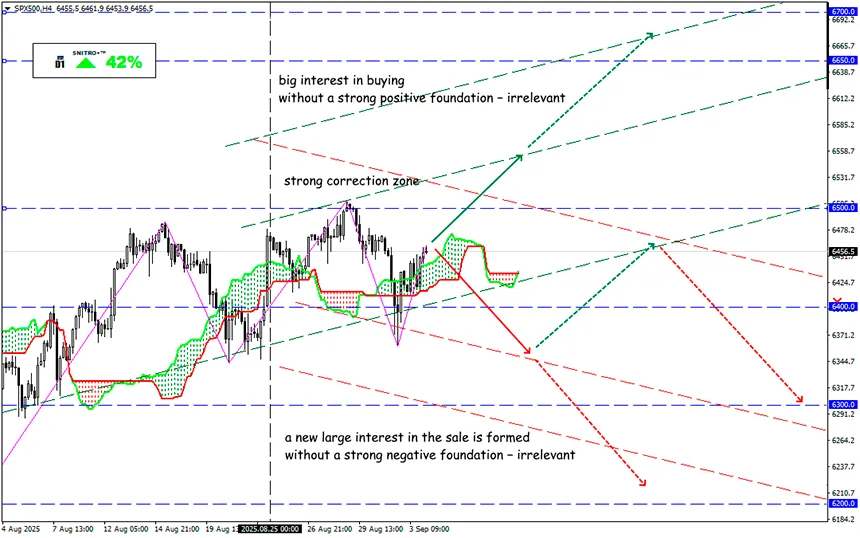
#SP500
Key zone: 6,400 - 6,500
Buy: 6,500 (on strong positive fundamentals); target 6,650-6,700; StopLoss 6,420
Sell: 6,400 (after a retest of the 6450 level); target 6,250-6,200; StopLoss 6,480
A new idea has emerged in the bond market: major investors hope that revenues from new tariffs will improve the U.S. financial position. But earlier this year Trump’s new trade war triggered a sharp drop in Treasury bond prices.
What changed?
Reminder:
In April, the U.S. imposed sweeping tariffs on its trading partners, which negatively impacted global markets and raised serious concerns about a potential economic crisis. Trump tried to soften the negative reaction by temporarily suspending some tariffs.
Trump used tariffs to achieve geopolitical goals and revive domestic industry, while also promising significant revenue from import taxes. Rating agencies S&P and Fitch said that future tariff revenues were the main argument for not downgrading the U.S. credit rating.
The Congressional Budget Office estimates that the tax reform Trump launched alongside tariff aggression will increase U.S. national debt by $4.1 trillion over the next 10 years. The only way to offset this burden is through revenue from new, extremely tough tariffs.
Now the market believes that income from remaining tariffs will help reduce the debt in the near term. This shift in market logic came after months of uncertainty in Trump’s economic policies, including his trade war with China and criticism of the Fed.
But last Friday, the Court of Appeals upheld a U.S. Court of International Trade ruling that Trump had overstepped his authority. Although the court allowed tariffs to remain in place until the Supreme Court reviews the case, the decision raised concerns in the bond market.
The risk of tariffs being struck down while tax reform remains in place may become the key challenge for the U.S. Treasury in the coming weeks.
If the court cancels most of Trump’s tariff program, it could reduce inflation and improve economic growth, which in turn may encourage the Fed to ease monetary policy. However, if the main focus shifts to debt and the budget deficit, the bond market could react negatively.
Yesterday, the S&P 500 rose by about 50 bps, although almost all of the gains came in the last 30 minutes of trading. The rally looked artificial, fabricated, and tightly controlled. The process was clearly managed by automated trading algorithms.
At the close, about $2 billion in buy orders remained in the S&P 500 market, which supported the move. But today this amount will likely be offset by selling. The market must find balance today, since tomorrow’s NFP report is critical.
So we act wisely and avoid unnecessary risks.
Profits to y’all!


