

















EU–China Summit: No One Expects Positivity
#NIKK225
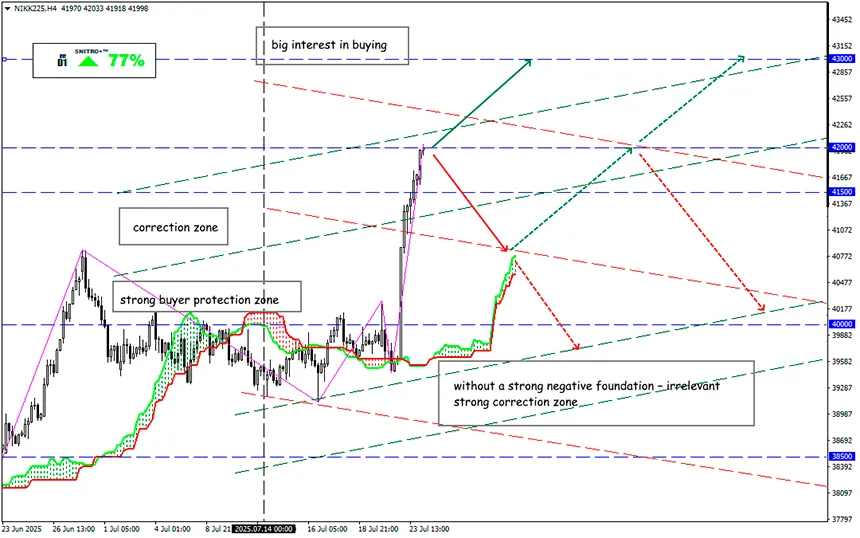
Key zone: 40,700 - 42,000
Buy: 42,000 (after a correction to 40,700); target 43,500; StopLoss 41,300
Sell: 40,500 (on a strong negative foundation); target 39,000; StopLoss 41,000
Expectations from the summit are minimal—diplomats consider the very fact of such a rendezvous a success. Trump has plunged the world into such chaos that long-hostile Brussels and Beijing have started exploring a business alliance against the U.S. But key contradictions remain.
Since the COVID-19 pandemic, relations between the EU and China have been complicated by numerous disputes, ranging from cyberattacks and human rights violations to Beijing’s “multifaceted” partnership with Moscow and trade imbalance.
The EU–China trade deficit exceeded €300 billion last year; in 2025, it could grow 2–3 times due to weak consumer demand in China and Trump’s tariffs.
For example, Beijing’s decision to restrict rare earth exports triggered wide concern in European industry and sharp comments from European Commission President von der Leyen.
Over the past year, the EU has launched more than 25 investigations related to trade with China. Last week, two Chinese banks were added to the blacklist, provoking outrage in Beijing.
China’s 8.2% export growth to the EU in April this year is driven by exporters rerouting goods originally intended for the U.S. to Europe to bypass Trump’s import tariffs. This mechanism can hardly be called a mutually beneficial partnership.
At the same time, both sides are not interested in destabilizing the situation.
The EU hopes China understands the consequences of Trump’s tariff aggression and will support Europe in defending shared interests. Beijing is fully confident that time is on its side and will not formalize any political or economic guarantees.
The only outcome von der Leyen and European Council President António Costa can realistically expect is a joint declaration on climate action ahead of the UN Climate Conference later this year. Significant concessions in other areas are unlikely.
The surprise deal with the U.S. shook Japan’s stock market. Immediately after the news, auto stocks surged following lower American tariffs. However, the speculative rise in major indices should not be misleading: there are still no factors for sustainable growth in the Asian market. A strong correction is expected, and until that necessary move occurs, new fundamental drivers may emerge and technical analysis will need to be redone.
So we act wisely and avoid unnecessary risks.
Profits to y’all!


