
















Why the Euro is rising amid the War
A fresh paradox in the FX market
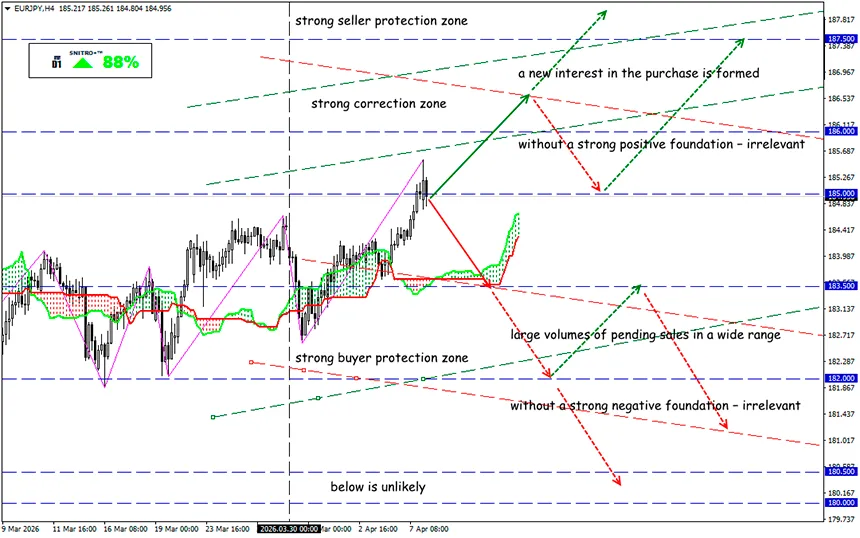
EUR/JPY
Key zone: 184.00 - 185.00
Buy: 185.50 (after retesting the 184.50 level); target 187.50; StopLoss 185.00
Sell: 183.50 (against a strongly bearish backdrop) ; target 181.50-180.00; StopLoss 184.00
At the peak of the Middle East conflict, the euro is unexpectedly strengthening. This contradicts classic logic: usually, expensive oil and geopolitical panic push the dollar up and the euro down. The secret lies in shifting expectations for Fed rates and a temporary decline in the geopolitical premium.
Markets have begun pricing in the risk that the Fed may pivot earlier than promised, while Trump’s “truce” has not yet led to an end of the Middle East conflict.
- The derivatives market (Fed Funds futures) is now pricing in more than a 40% probability of a rate cut by September. The reason is stagflation concerns. If the Fed begins easing, the dollar will lose its key yield advantage, while the euro will gain a new upward impulse not supported by fundamentals.
- After Trump announced a two-week truce with Iran, the geopolitical premium dropped sharply. Oil collapsed, risk appetite increased, and an active repositioning began in the FX market.
- Trump’s ultimatum to Iran and the two-week truce are meant to halt military strikes and reopen transit through the Strait of Hormuz. Markets perceived this as a pause, leading to profit-taking in the dollar and oil. For the euro, this is a temporary positive: Europe still depends on imports, and the absence of new attacks allows it to rebuild raw material reserves. However, the risk of escalation remains.
Risk appetite is rising in the market, and as a result, the safe-haven greenback is losing interest from large capital — the dollar index is falling toward the base of the 98 figure, although just yesterday it was testing the 100 level.
Recall:
Since the end of February, the dollar had been strengthening without interruption. This was driven not only by classic investor panic but also by macroeconomic pragmatism: markets believed that the US economy, as a net oil exporter, is far better protected from a global energy shock than import-dependent Europe and Asia.
As soon as the threat of an oil collapse receded, investors began aggressively taking profits on dollar positions.
But how long will this “optimism rally” last?
In just one trading session, the dollar lost more than half of all gains accumulated since the start of hostilities on February 28. The US currency suffered the most painful losses against high-risk assets: the South African rand and the Swedish krona strengthened by about 2% against the dollar.
Retail traders are now seeing the euro rise and rushing to buy without waiting for stronger confirmation signals. The multi-day oversold condition has not yet been fully worked off by the market. Look at cross rates — even a correction is not visible there, and the reversal signal in EUR/USD remains unstable.
And what is the result?
The parties to the conflict in the Persian Gulf managed to step back from the “edge of the abyss” after reaching a critical point. At the same time, official representatives of all sides have already declared victory in the war, while stating that formal negotiations should begin on April 11 in Islamabad.
Nothing has been resolved yet in the situation with Iran; the euphoria will fade quickly, and the risk of renewed war remains very real. This means that the current rise of the euro is вполне justified.
So we act wisely and avoid unnecessary risks.
Profits to y’all!


