


















S&P 500: alternative reality
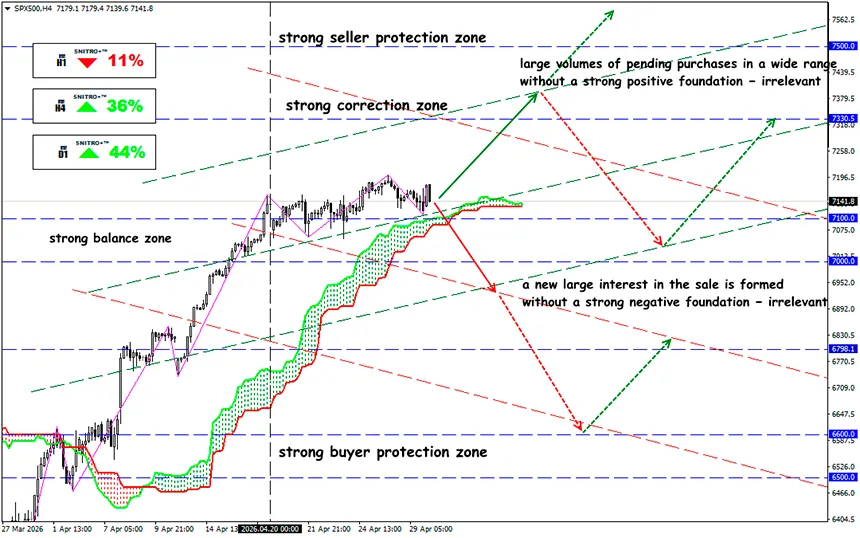
Where the market is looking
SP500
Key zone: 7,000 - 7,100
Buy: 7,200 (on strong positive fundamentals); target 7,350-7,500; StopLoss 7,150
Sell: 7,000 (upon a decisive break above the 7,050 level); target 6,800; StopLoss 7,070
Today, two logics are competing in the market: one — in oil, currencies, and bonds; the other — in equities. Recall: in financial markets, as in life, the one who is wrong is not the one who sees little, but the one who looks through only one window.
- Arguments for the first scenario: Brent exceeded $126 and reached a four-year high, the yield on 30-year U.S. Treasuries is again at 5%, ten-year UK bonds are at the same level, and the yen has weakened to 160.
- The second argument: the U.S. market volatility index is now around 18 points — lower than before the conflict around the Strait of Hormuz began. A new high was formed on news that the U.S. military command is preparing aggressive options for further actions for Trump, while Tehran refused to open the strait for navigation.
According to Goldman estimates, oil flow through Hormuz is currently about 4% of normal levels. On Polymarket, the probability of reopening the strait by the end of June is 52%. Two months ago, such a situation would have meant a global market collapse.
But since March 30, the S&P 500 has risen by 13%. Bonds, oil, and the currency market are behaving as if inflation has seriously returned. The yield on two-year Treasuries rose by 11 basis points — the largest daily increase in six months.
The market is not pricing in Fed rate cuts this year. The ECB has shifted its forecast over four months toward expectations of three rate hikes starting in June. At the latest FOMC meeting — 4 votes “against” and 8 “for” — such a divergence has not been seen since October 1992. The regulator has tightened its inflation assessment: the main reason is rising oil prices.
Outgoing Powell says he will not interfere in decision-making. That is unlikely to be true. The new Fed chair Warsh will almost certainly face difficulties in lowering the policy rate. This further reduces the chances of Republicans maintaining full control in Congress after the midterm elections this fall.
The equity market thinks differently: if inflation rises and persists, businesses that can firmly pass rising costs into revenue will survive and profit. Possibly, this is what the S&P is pricing in, rather than the end of the Middle East conflict. And this logic is вполне rational.
In geopolitics, there are no changes so far. Today is the last day Trump can continue military actions in Iran. After that, he needs Congress approval. It is believed he will not receive it. This means he will have to declare the end of the military operation. This could become a short-term positive.
So we act wisely and avoid unnecessary risks.
Profits to y’all!


