


















Dollar loses credibility
A strong greenback is of no interest to the market
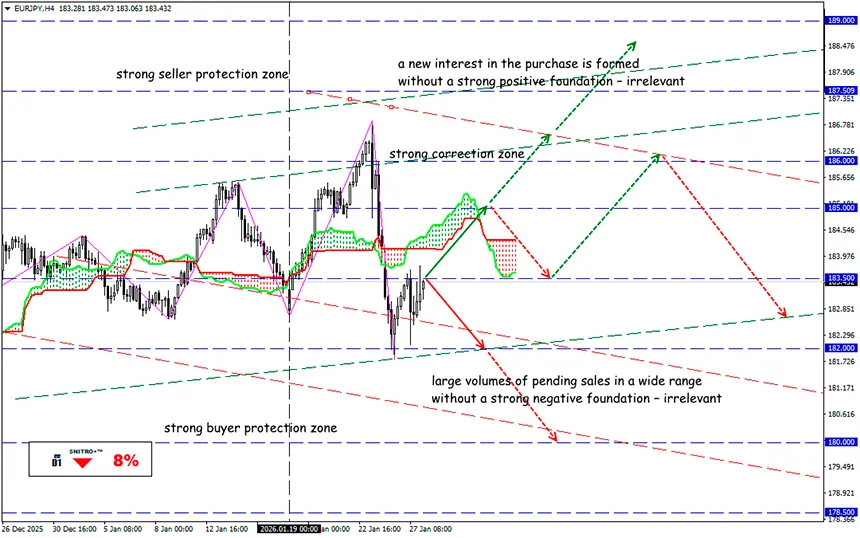
EUR/JPY
Key zone: 183.00 - 184.00
Buy: 184.50 (on a confident breakout of the 184.00 level) ; target 186.00; StopLoss 183.80
Sell: 182.50 (on strong negative fundamentals) ; target 181.00; StopLoss 183.20
Trump promised a weak dollar — and delivered. The DXY has fallen to a four-month low. The market fully rules out a rate cut by the FOMC today, while the probability of a cut at the March meeting is estimated at no more than 13%.
The US dollar is under pressure from portfolio rotation out of US assets. As of January 21, capital outflows from US-focused ETFs reached $17 billion. Funds are actively moving into Europe and Japan.
- The decline of the USD index is supported by rumors of a new government shutdown — Polymarket estimates the probability at 78%. The risk of another crisis increased after public and Democratic backlash following the killings in Minneapolis, which intensified criticism of Trump’s migration policy. A shutdown could slow US GDP growth and force the Fed to return to monetary easing faster than expected.
- A weaker dollar theoretically stimulates US exports by making American goods more competitive globally. This could (theoretically!) lead to higher industrial activity and job creation.
- At the same time, dollar weakness hurts US consumers’ purchasing power by raising prices of imported goods. Moreover, the dollar’s decline is occurring alongside falling US Treasury prices and rising yields — US government debt is losing investor appeal.
- An additional negative driver is the strengthening Japanese yen, which triggered a sharp reaction from investors. Credible signals of US currency manipulation aimed at buying yen confirm that current policymakers are simply unconcerned about the risks of dollar depreciation.
- Gold’s rally also reflects serious doubts about Trump’s chaotic and spontaneous policymaking, including fresh threats toward Canada and South Korea. Precious metals are transforming from inflation hedges into insurance against US economic policy.
Trump’s comments have only worsened the situation. Investors expect further dollar weakening.
Panic over the Fed’s independence continues. Investors increasingly discuss the risks of radical changes in US economic policy.
In fact, today’s Fed meeting has little real significance. Dollar stability is not a priority of monetary policy. Powell promised to “pause” in December and will likely keep his word.
Other issues dominate the Fed agenda now:
- Trump may announce a new Fed chair soon — and it doesn’t really matter who it is. The new chair will exert psychological pressure on the FOMC from within, while Trump applies pressure from the outside.
- Legal proceedings involving Lisa Cook and Jerome Powell remain ongoing. Court cases may drag on, but Trump will try to accelerate them.
Hopefully, personal sanctions (or tariffs) against US Supreme Court judges will not be introduced.
Thus, the current Fed meeting will not affect market sentiment: the regulator will keep all policy parameters unchanged and provide no meaningful support to the dollar. Future Fed actions remain a subject of economic and political blackmail.
So we act wisely and avoid unnecessary risks.
Profits to y’all!


