















Europe under a double blow
Hormuz pushes oil higher and the ECB toward rate hikes
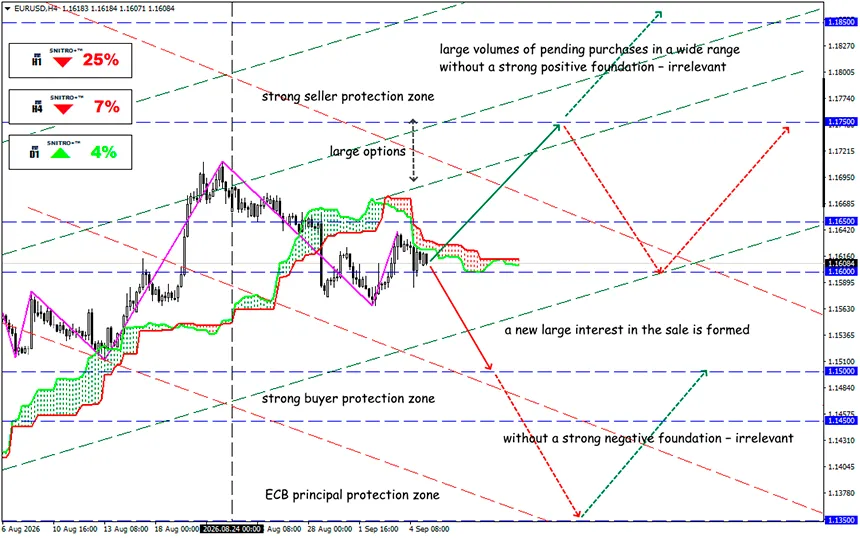
EUR/USD
Key zone: 1.1600 - 1.1650
Buy: 1.1680 (on a confident break above 1.1650) ; target 1.1850-1.2000; StopLoss 1.1620
Sell: 1.1550 (on strong negative fundamentals) ; target 1.1350; StopLoss 1.1620
The geopolitical shock is intensifying inflation and reducing the room for European equities to rise. Europe enters the new week under pressure from two factors at once — a sharp increase in energy risks due to tensions around the Strait of Hormuz and expectations of another ECB rate hike.
A reminder:
For equities, this is a dangerous combination: rising oil prices increase inflation, while tighter central bank policy raises the cost of capital. European stocks started the week lower. The STOXX 600 lost about 0.1%, the DAX 0.3%, as investors assessed the consequences of a new escalation in the conflict between the U.S. and Iran and prepared for the ECB meeting on September 10.
The main source of risk is the Strait of Hormuz, through which a significant share of global oil and LNG supplies passes. The new escalation has already affected the commodities market: Brent rose to approximately $97.60 per barrel, reaching a seven-week high.
For Europe, this is an especially negative scenario.
Higher fuel costs directly increase transportation and production expenses while simultaneously raising inflation expectations. If supply disruptions persist, the energy shock could shift from a temporary factor into more sustained pressure on the margins of European businesses.
The Eurozone is already showing the consequences of the energy shock. In August, consumer inflation accelerated to 3.3% from 2.9% in July, while energy prices rose 14.3% year over year. At the same time, core inflation declined to 2.4%, indicating that the new inflationary impulse is predominantly energy-driven.
For the stock market, the problem lies not so much in the hike itself as in the prospect of further tightening. Deutsche Bank already allows for another 25 bp hike in December and sees 2.75% as the more likely terminal rate if the energy crisis persists.
This creates pressure on the segments most sensitive to financing costs — real estate, construction, and growth companies with long-duration cash flows.
The U.S. is adding another source of pressure.
- The situation is being complicated by U.S. macroeconomic data. In August, the U.S. economy added 162,000 jobs versus expectations of around 55,000–65,000, while unemployment remained at 4.1%.
- A strong labor market reduces the need for rapid Fed easing and supports bond yields. Therefore, the next key catalyst will be U.S. CPI, which is expected to be released ahead of the September 15–16 FOMC meeting.
For global equities, this creates an extremely uncomfortable combination: oil prices are rising, inflation expectations are increasing, and central banks have less room to cut rates.
In the short term, the advantage remains with defensive strategies.
- STOXX 600 and DAX: rising oil prices and bond yields create a risk of further correction. Buying is justified only if the geopolitical premium declines and the energy market stabilizes.
- European energy companies: remain relative beneficiaries of expensive oil. At the same time, traders should take into account the risk of a sharp reversal in prices if the Middle East de-escalates.
- Real estate and growth companies: are the most vulnerable to further increases in yields. Here, pressure from rates may outweigh support from the broader stock market.
So, What Does This Mean?
Inflation is pushing the ECB back toward rate hikes. The market is pricing in almost completely a 25 bp increase in the ECB deposit rate — from 2.25% to 2.50% — at the September 10 meeting.
For traders, the key indicator now is not the level of the indices itself, but the following chain:
Brent → inflation expectations → bond yields → ECB/Fed policy → equity valuations.
As long as Brent remains around $100 and central banks are forced to respond to the inflationary impulse, the potential for sustained growth in European equities remains limited.
The main risk for bulls is not a one-off ECB rate hike, but a scenario in which a prolonged energy crisis forces central banks to keep rates high for longer than the market expects.
For EUR/USD, the combination of a more hawkish ECB and rising U.S. rates creates two-way risk. Therefore, the direction of the pair will depend primarily on the relative dynamics of Bund and Treasury yields, rather than solely on oil prices.
So we act wisely and avoid unnecessary risks.
Profits to y’all!


