


















Europe stabilizes: London as the anchor point
UK data supports the euro
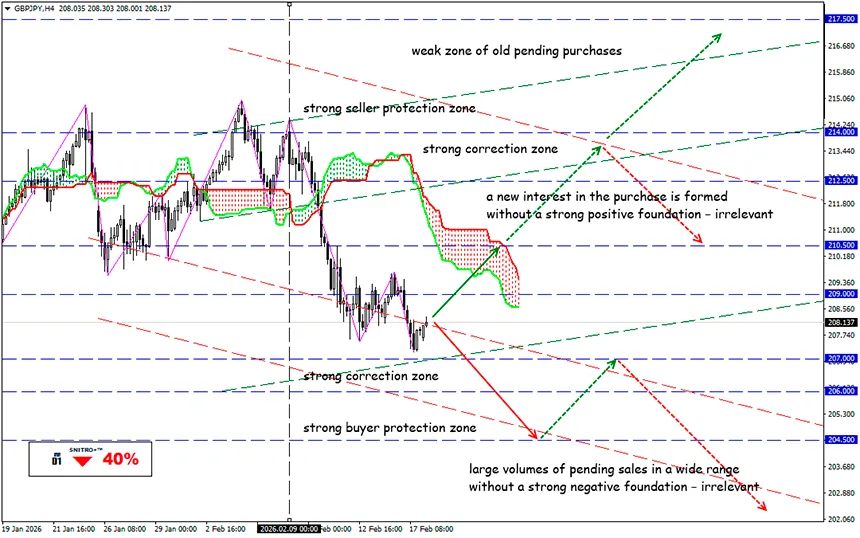
GBP/JPY
Key zone: 207.00- 209.00
Buy: 209.50 (on a confident breakout of the 209.00 level); target 210.50-211.50; StopLoss 208.80
Sell: 206.50 (on strong negative fundamentals) ; target 205.00-204.50; StopLoss 207.20
European stock indices are trying to move higher (DAX +0.7%, CAC 40 +0.5%, FTSE 100 +0.5%) as investors analyze the latest quarterly corporate earnings reports as well as data showing a slowdown in inflation in the UK.
Overall, corporate results are positive: about 60% of European companies have beaten profit expectations so far, compared with a typical quarter when around 54% exceed analysts’ forecasts.
Inflation in the UK has dropped sharply to its lowest level since March last year, increasing the probability that the Bank of England’s base rate will be cut to 3.5% as early as next month.
Although the core inflation rate in the UK remains above 2%, the pace of price growth is expected to slow significantly in April, as last year’s surge in utility costs and other government-regulated tariffs drops out of the annual comparison.
Weak employment data in the UK reinforce similar expectations of rate cuts.
- The unemployment rate rose to 5.2% versus the expected 5.1% – the highest level in five years.
- Job creation slowed from 82,000 to 52,000.
- The number of people claiming unemployment benefits in January jumped by 28,600 after a modest increase of 2,700 previously.
- Average earnings excluding bonuses slowed from 4.6% to 4.2%.
This combination – rising unemployment, weaker hiring, and a sharp increase in benefit claims – suggests that the labor market is genuinely losing momentum rather than reflecting mere statistical noise.
As a result, the pound remains trapped between weaker growth and only gradual disinflation.
Disagreements within the Bank of England intensify the debate over interest rates. Importantly, officials continue to emphasize the role of wages and labor market conditions in shaping this assessment. Wage growth has slowed, but it is still viewed as a potential source of persistent inflation.
The yen factor weighs on the European market.
Concerns about a possible sharp increase in the issuance of Japanese government bonds (JGBs) eased last week, which likely served as a catalyst for several bearish reversal patterns seen in yen cross rates. This shift followed the government’s pledge to limit the planned reduction in the food sales tax to a temporary two-year period, as well as speculation that this measure could be financed through sources other than new borrowing.
So what does this mean?
Bearish weekly reversal signals are emerging in yen crosses – EUR/JPY and GBP/JPY – calling further upside into question. While broader uptrends remain intact for now, the appearance of these signals at elevated levels suggests that directional risks may begin to shift. Both pairs are testing support, so traders may not have to wait long for confirmation.
So we act wisely and avoid unnecessary risks.
Profits to y’all!


