



How CFD Trading Platforms Are Changing: Cryptocurrencies, AI, and the Future of Trading

Just a few years ago, not much was required from a trading platform: display quotes and charts, accept orders, and help monitor open positions.
Just a few years ago, not much was required from a trading platform: display quotes and charts, accept orders, and help monitor open positions.
All of this remains, but now a modern CFD trading platform can include analytical tools, automated trading, AI, social features, connections to external programs, and access to several asset classes at once.
Essentially, it is no longer just a terminal where trades are opened and closed. Here, a trader receives data, analyzes the market, configures automated actions, and manages positions.
Let's look at which technologies have had the greatest impact on this process and what may change next.
How the CFD Trading Platform Is Changing
The basics remain the same: through the platform, a trader monitors the market, opens and closes positions, and manages trades.
But it is no longer limited to the familiar functions. A modern CFD platform can include advanced analytics, risk management tools, automated trading systems, and social features. External programs and custom algorithms can be connected to it.
CFD trading software itself has also changed. In the past, a trading terminal was most often a separate program installed on a computer. Now trading can be done through a browser or mobile app, while data and settings can be synchronized across devices.
What previously might have required several programs and services is now increasingly brought together in a single platform. Different functions do not operate separately but within one system — this is how CFD trading technology is developing today.
Therefore, today's CFD trading tools include not only everything needed to open and close trades, but also analytics, automation, notifications, and risk control tools.
CFDs and Cryptocurrencies
Cryptocurrencies have added a new class of instruments to trading platforms.
But buying cryptocurrency and trading cryptocurrency CFDs are not the same thing. If a person buys Bitcoin, Ether, or another digital asset directly, they become its owner. When trading CFDs, the trader does not own the asset itself: the result of the trade depends on how its price changes.
At the same time, positions can be opened both in anticipation of a price increase and a price decrease.
Digital assets are characterized by high volatility: their value can change significantly over a short period of time. Therefore, it is especially important to consider risk here.
There is another feature as well. The cryptocurrency market operates around the clock and seven days a week, so the trading infrastructure must provide constant access to market data.
But this does not mean that cryptocurrency CFDs are also available 24/7 with every broker. The schedule depends on the broker's terms and the infrastructure used.
Algorithmic Trading and Automation
Some actions no longer need to be performed manually by the trader. They can be delegated to a program.
The principle is quite simple: the trader sets the conditions in advance, and the system monitors the market. When they are met, the program can generate a signal or send an order itself. This is how algorithmic CFD trading works.
For example, the system can open a position when a certain price is reached, close a trade at a specified profit level, or limit a loss.
Trading robots work according to the same principle. They can monitor a large volume of data at once and react to the required events without the trader's constant involvement.
In a broader sense, trading automation covers not only opening and closing trades, but also position management, trading signals, and control of individual risk parameters.
At the same time, automated CFD trading does not mean that the program "understands the market." It simply acts according to predefined conditions.
If the strategy turns out to be unsuccessful or there is an error in the settings, the system will not understand this on its own. Automation removes some manual work and helps execute the strategy faster, but the strategy and the risks associated with it still have to be assessed by a person.
AI as Part of Modern Trading Infrastructure
Algorithmic trading and CFD trading with AI are different things.
A conventional algorithm operates according to predefined rules. For example: if the price reaches a certain level, perform a specific action.
AI works differently. It can process large volumes of data, identify recurring relationships in them, and use machine learning models.
Within a trading platform, such tools help analyze market data and news, assess market participant sentiment, and find trading ideas.
Another option is a built-in AI assistant. It can be asked a question in ordinary language, for example, to collect important news and data on a market of interest.
Instead of reviewing dozens of sources independently, the trader receives a brief summary and then decides what to do with it.
But AI cannot accurately predict price movements. A model may misinterpret data, miss an important factor, or draw a conclusion based on poor-quality information.
Therefore, AI here is more of a tool that helps process large volumes of data faster. Market risk does not disappear because of it.
Programming Interface and the Development of Open Trading Infrastructure
Not all necessary tools have to be built directly into the platform. Sometimes it is more convenient to connect an external service to it.
For this purpose, a programming interface for CFD trading is used — a way for different systems to exchange data and commands.
For example, an analytical system can receive quotes, process them, and send an order to the broker when specified conditions are met.
Through such an interface, you can connect your own trading algorithm or analytical service, receive market data, and automatically manage positions.
In simplified form, the chain looks like this:
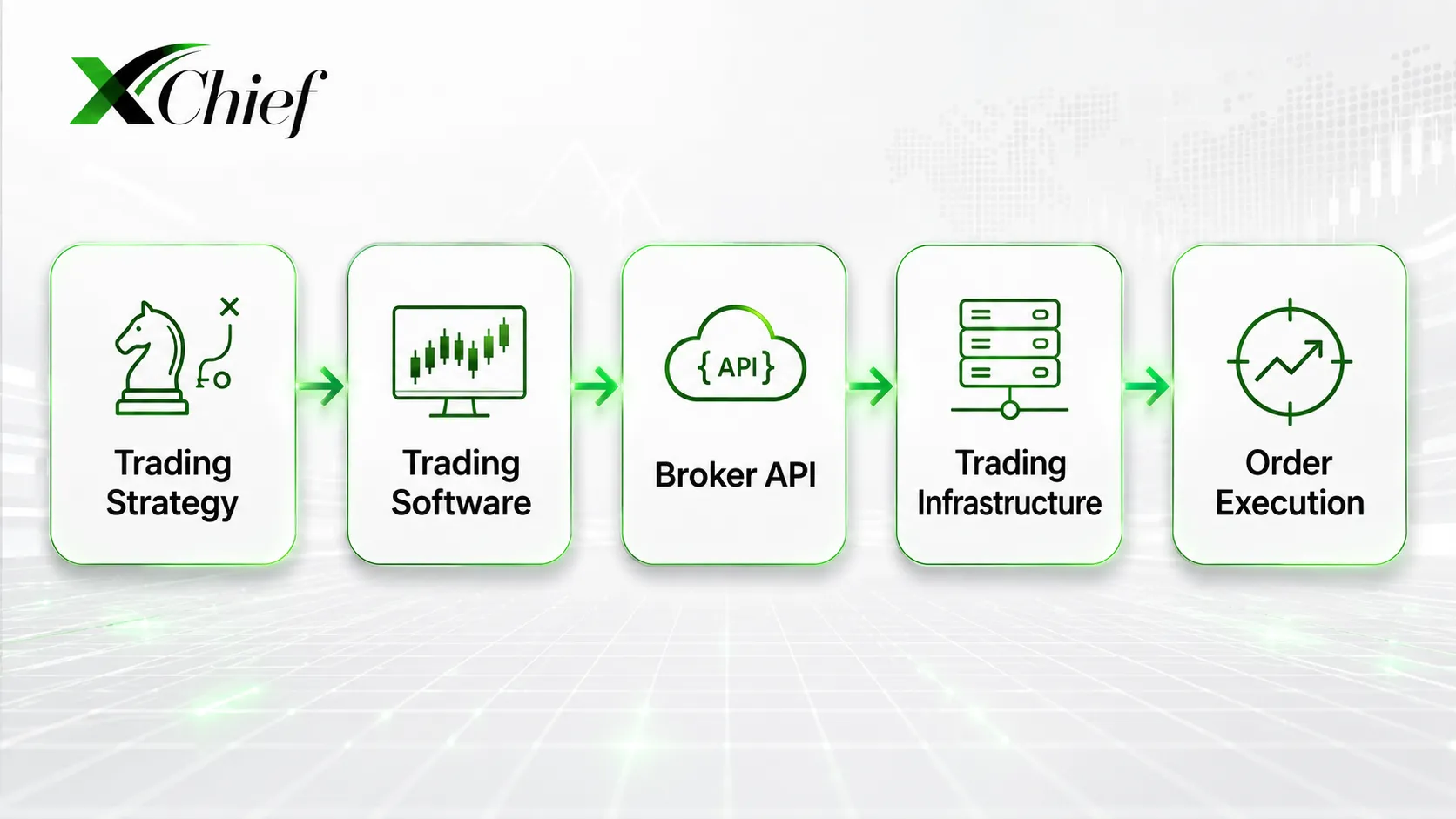
Essentially, a CFD programming interface connects the broker's system with external services. But it does not decide which trade to open or when. Its task is to transmit data and commands.
Social Trading and Copy Trading
Social features have also appeared in trading platforms.
Users can publish trading ideas, show statistics, discuss the market, and share signals and strategies. This format is called social trading.
A separate feature is copy trading. The user selects another trader or strategy, and the platform automatically replicates their trades in the user's account.
This really does make things easier: there is no need to monitor every trade and then replicate it manually.
But it is not only successful decisions that are copied.
A strategy's good past performance does not mean that it will perform the same way in the future. In addition, someone else's level of risk may simply not be suitable for a particular trader.
Therefore, even with automatic copying, it is important to monitor position size and potential losses.
Trading Multiple Asset Classes
In the past, a trading system was often designed for a single market. Now platforms increasingly provide access to several asset classes at once.
Depending on the broker, these may include currencies, stock indices, commodities, stocks, cryptocurrencies, and other instruments.
A multi-asset trading platform allows traders to work with them through a single interface and see all open positions in one place.
It is not only about having a wider choice. Different instruments can also be analyzed and overall risk controlled in the same place.
There is no need to use one program for currencies, another for stocks, and a third for cryptocurrencies. Everything needed can be brought together in a single system.
Asset Tokenization
With tokenization, certain rights to an asset or financial instrument are converted into digital form. Blockchain can be used for this purpose.
This approach can be applied, for example, to stocks, bonds, or commodities. In some cases, an asset can be divided into small fractions, while settlements can be carried out using blockchain. But tokenized assets and CFDs are different things.
A CFD is a contract whose result depends on changes in the price of the underlying asset. Tokenization involves a digital representation of certain rights to the asset itself or a financial instrument associated with it.
Therefore, tokenization and CFDs should not be considered the same thing. And it is far too early to say that one technology will eventually replace the other.
For now, tokenization is more appropriately viewed as part of the broader development of digital financial infrastructure.
How the Interface of Trading Platforms Is Changing
In the past, trading usually required a computer with a terminal installed. Now an online CFD trading platform can operate through a browser, while many functions are also available in a mobile app. Data and settings can be stored in cloud infrastructure.
Therefore, a trader can start working on a computer and then check a position from a smartphone.
The workspace has also become more flexible: traders can select the required charts and indicators, configure panels and notifications, and connect additional analytical tools.
Risk control tools can also be built into the platform. For example, the system can monitor position parameters and issue a warning when they reach specified values.
As a result, the trader is no longer as dependent on a specific device: key data and settings are accessible both from a computer and a smartphone.
The Future of CFD Trading Platforms
It is impossible to say exactly what trading platforms will look like in a few years. But several development trends are already visible.
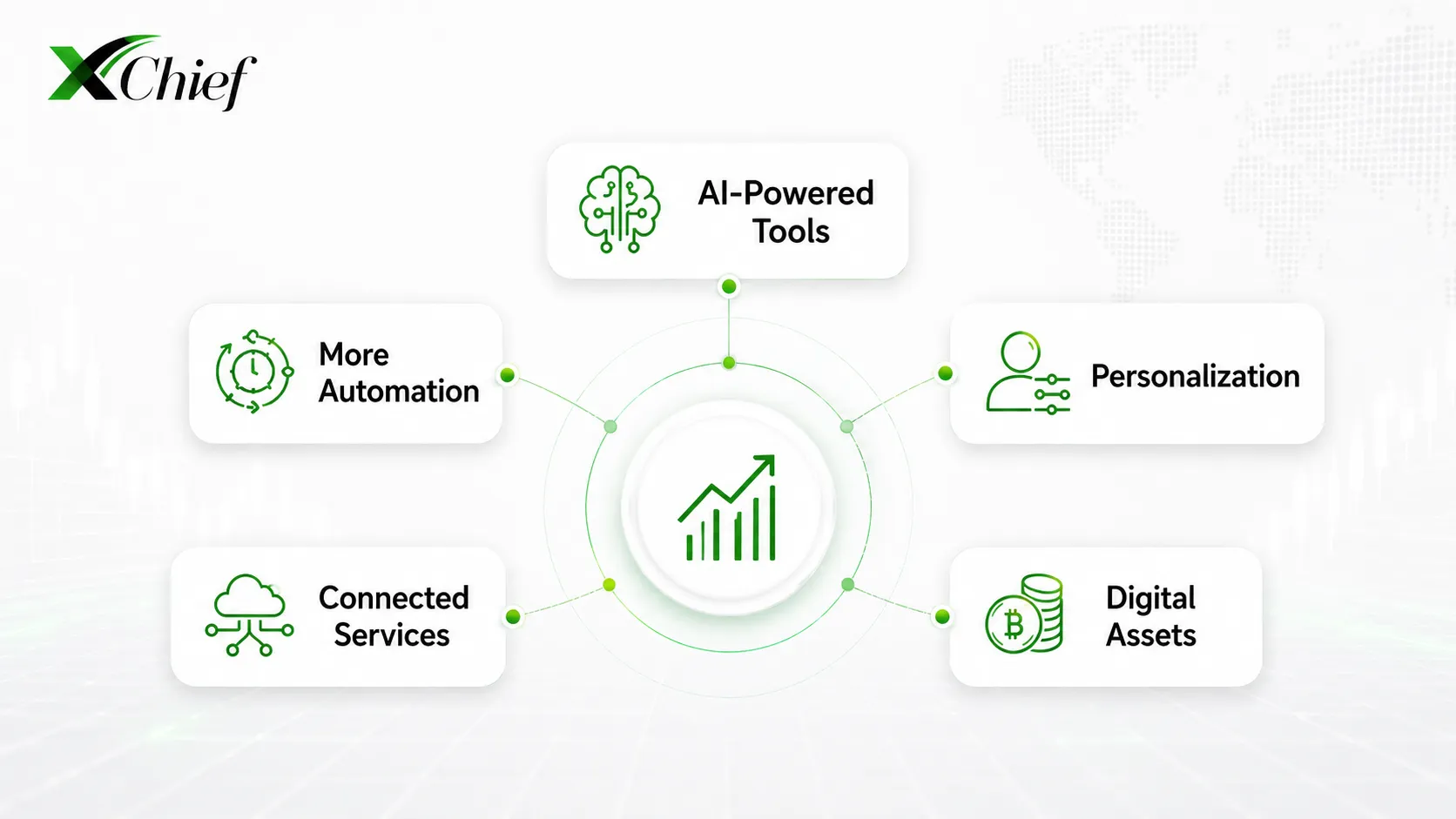
More automation. Platforms may take on more repetitive tasks: monitoring the market, performing predefined actions, calculating risk indicators, and sending notifications.
Development of AI-based tools. For example, automatic news analysis, brief market summaries, searching for required data, or communicating with trading software in ordinary language.
Personalization. The interface may adapt to the markets and instruments the trader works with most often, as well as take into account the history of platform usage.
Closer integration of different services. Trading software, analytical systems, external applications, and automation tools may increasingly work as parts of a single infrastructure.
Development of digital assets. Cryptocurrencies, tokenized instruments, and other digital assets may expand the range of available opportunities.
Most likely, the future of CFD platforms is not tied to any single technology that will transform trading all at once. It is much more likely that different tools will become increasingly integrated within a single system.
Main Risks of Trading Technology Development
The more tasks a program performs, the more depends on how correctly it is configured and how it operates.
There may be an error in a trading algorithm. An automated system may not work as expected. AI can process data incorrectly or draw a conclusion based on incomplete information.
There is another risk as well — relying too heavily on automation.
If a program monitors the market, sends orders, or copies someone else's trades on its own, the user may check its operation less frequently. But this does not mean that all of the system's actions will be correct.
Data quality is a separate issue. If the source information is incorrect or arrives with a delay, the analysis results may also be incorrect.
And the more external services are connected to the trading system, the more important it is to protect data and access to the account.
New technologies can speed up analysis and trade execution, but market risk does not disappear because of them.
Traditional Trading Terminal and Modern CFD Platform
| Function | Traditional Trading Terminal | Modern CFD Trading Platform |
| Quotes | Yes | Yes |
| Charts | Yes | Advanced analytical tools |
| Order execution | Yes | Yes |
| Access via browser and smartphone | Limited | One of the standard options |
| Algorithmic trading | Sometimes | Becoming increasingly common |
| Connecting external programs | Limited | An important part of integration |
| AI-based tools | Were practically absent | Actively developing |
| Social trading | No | Can be built in |
| Copy trading | No | Can be built in |
| Access to different asset classes | Limited | One of the main areas of development |
| Cloud infrastructure | Limited | Used increasingly often |
The specific set of functions depends on the platform and broker.
Conclusion
A modern CFD trading platform has long been about more than simply opening and closing trades.
Market data, analytics, automated trading, AI, social features, external programs, and instruments from different markets can all be brought together in one place.
At the same time, the fundamentals of CFD trading have not changed. The result of a trade still depends on price movements, position size, leverage, and risk management.
All these technologies remain tools. They help analyze the market faster, reduce some manual work, and make the platform more convenient. But they do not guarantee the right decision or protect the trader from losses.
Frequently Asked Questions
What Is a CFD Trading Platform?
A CFD trading platform is a program or online service through which a trader receives quotes, analyzes the market, opens and closes positions, and manages trades.
Modern platforms can also include automated trading, additional analytical tools, AI, and other features.
What Is CFD Trading Software?
CFD trading software is a broader concept. It includes the trading platform itself, as well as programs for market analysis, trading automation, and position management.
How Have CFD Trading Technologies Changed?
In the past, a trading terminal mainly displayed quotes and charts and allowed orders to be submitted. Now a single platform can include automation, AI, social features, connections to external programs, and access to different asset classes.
Can CFD Trading Be Automated?
Yes, if the platform and broker support this capability. A program can monitor the market and open or close positions when predefined conditions are met.
But the rules are still set by a person. Automation itself does not make a trading decision correct.>
What Is Algorithmic CFD Trading?
Algorithmic CFD trading is trading according to predefined rules. The program monitors the market and, when the required conditions are met, can generate a signal or send an order.
How Is AI Used in CFD Trading?
AI can analyze large volumes of market data and news, identify patterns, assess market participant sentiment, and help find trading ideas.
But it does not guarantee an accurate prediction of price movements.
Can You Trade Cryptocurrency CFDs?
Yes, if the broker offers such instruments. In this case, the trader does not buy the cryptocurrency itself: the result of the trade depends on changes in its price.
Trading hours depend on the specific broker and do not necessarily match the cryptocurrency market's round-the-clock operation.
What Is Social Trading?
Social trading refers to platform features that allow users to view the ideas, statistics, and strategies of other market participants, share their own approaches, and discuss trading.
What Is Copy Trading?
Copy trading is a feature in which the platform automatically replicates the trades of a selected trader or strategy.
It simplifies the process itself, but does not protect against losses: past performance does not guarantee the same results in the future.
What Is a Trading Programming Interface?
It is a way to connect a broker's trading infrastructure with an external program. Through it, quotes can be received, orders can be transmitted, and trading algorithms can be connected.
The programming interface itself does not make trading decisions.
What Is Multi-Asset Trading?
It is the ability to work with instruments from different markets through a single platform. Depending on the broker, currencies, indices, commodities, stocks, and cryptocurrencies may be available.
What Are Tokenized Assets?
Tokenized assets are associated with the digital representation of certain rights to an asset or financial instrument. Blockchain can be used for this purpose.
Are Tokenized Assets and CFDs the Same Thing?
No. A CFD is a contract whose result depends on changes in the price of the underlying asset. A tokenized instrument is associated with the digital representation of certain rights to an asset or a financial instrument linked to it.
How Might CFD Trading Platforms Change in the Future?
Likely directions include further automation, broader use of AI, interface personalization, closer integration of different services, and the development of digital assets.
But these are only possible directions, not a guaranteed scenario.


