


















How CFD brokers make money: breaking down the business model without the myths

A modern CFD broker is not just a trading platform. Behind its operation lies an entire infrastructure: liquidity providers, order execution systems, risk management mechanisms, and pricing technology. The broker's income comes from several sources - spreads, commissions, swaps, and certain additional fees.
There are plenty of myths surrounding CFD brokers. One of the most common is that a broker only makes money when a client loses.
Because of this, many beginner traders view CFDs with distrust and assume that a broker is always interested in its clients losing. But the reality is a bit different.
A modern CFD broker is not just a trading platform. Behind its operation lies an entire infrastructure: liquidity providers, order execution systems, risk management mechanisms, and pricing technology. The broker's income comes from several sources - spreads, commissions, swaps, and certain additional fees.
In this article, we'll look at how a CFD broker's business model works, who is involved in executing trades, and why common assumptions about how these companies operate often turn out to be oversimplified.
Why do you need a CFD broker?
A CFD trading broker acts as an intermediary between the trader and the market. It provides access to market quotes, executes orders, and allows trades to be opened using leverage. For most retail traders, a broker is the only way to access CFD trading, since they generally cannot enter into such trades directly.
How a CFD trade takes place
To understand what a broker earns on, let's first look at what happens after a trader clicks the Buy or Sell button.
The process usually looks like this:
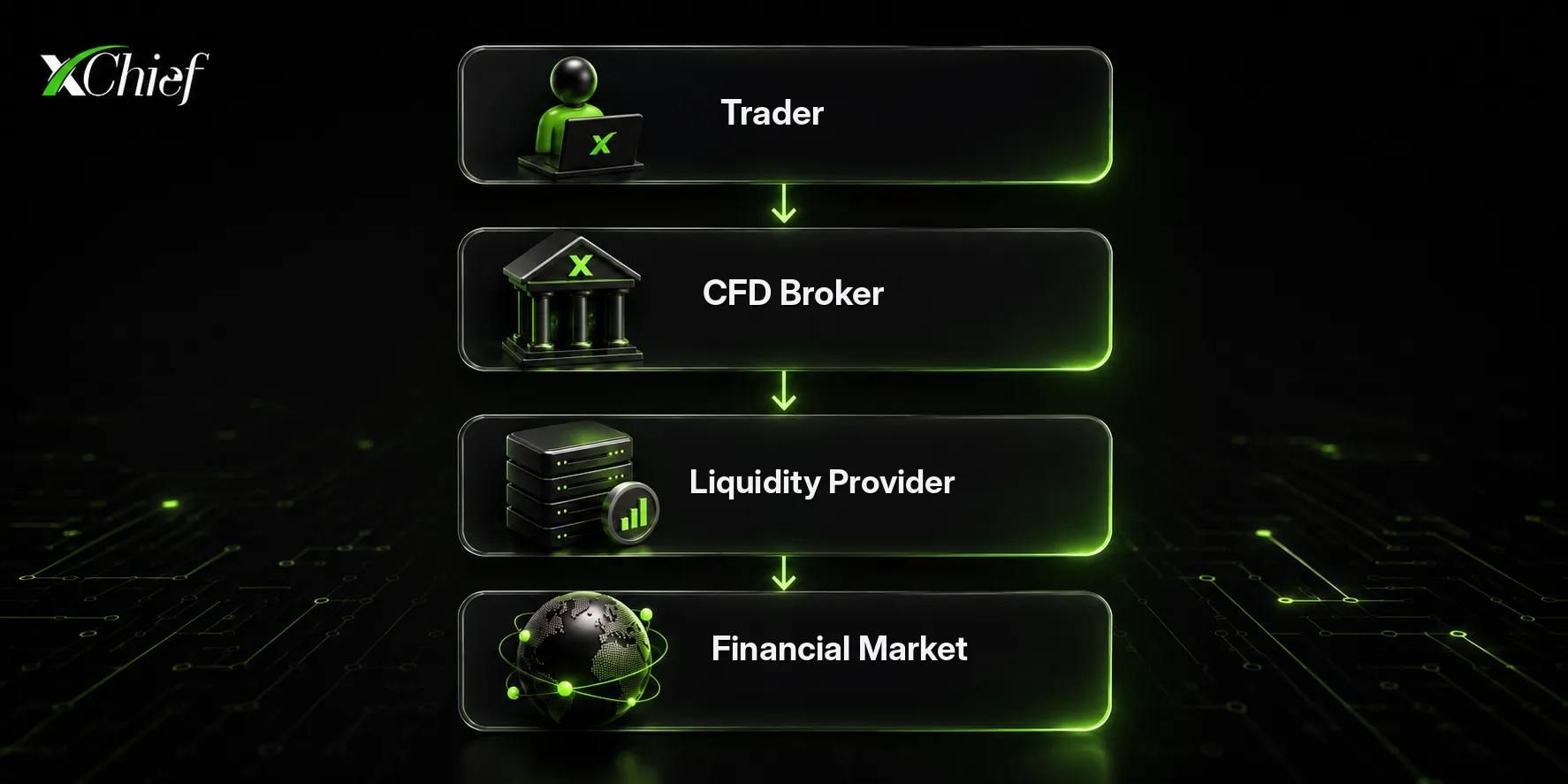
- The trader submits an order through the trading platform.
- The broker receives the order and checks its parameters.
- Depending on the execution model, the trade is either passed on to a liquidity provider or kept within the broker.
- The order is then executed, and the trader receives a confirmation.
At this stage, you'll often come across the terms order execution, market execution, slippage, and liquidity. Let's break down what each of them means.
Order execution (execution) is how a broker processes a trader's order and opens or closes a trade.
If a broker uses market execution (market execution), the trade is opened or closed at the best price available at the time the order is processed. Since the market is constantly moving, the final price may differ slightly from the one the trader saw when submitting the order.
This difference is called slippage (slippage). It isn't always negative - it can be positive as well. Sometimes a trade opens at a less favorable price, and sometimes, on the contrary, at a better one.
How large the slippage turns out to be depends largely on liquidity (liquidity). The higher it is, the easier it is to open or close a trade at a price close to the one the trader sees in the terminal.
Where does liquidity come from, and who forms market quotes? We'll cover that in the next section.
Who are liquidity providers
Liquidity providers are major participants in the financial market that quote buy and sell prices for various assets. They include:
- international banks;
- investment banks;
- market makers;
- ECN venues;
- other large financial institutions.
Their role can be represented in the following diagram:
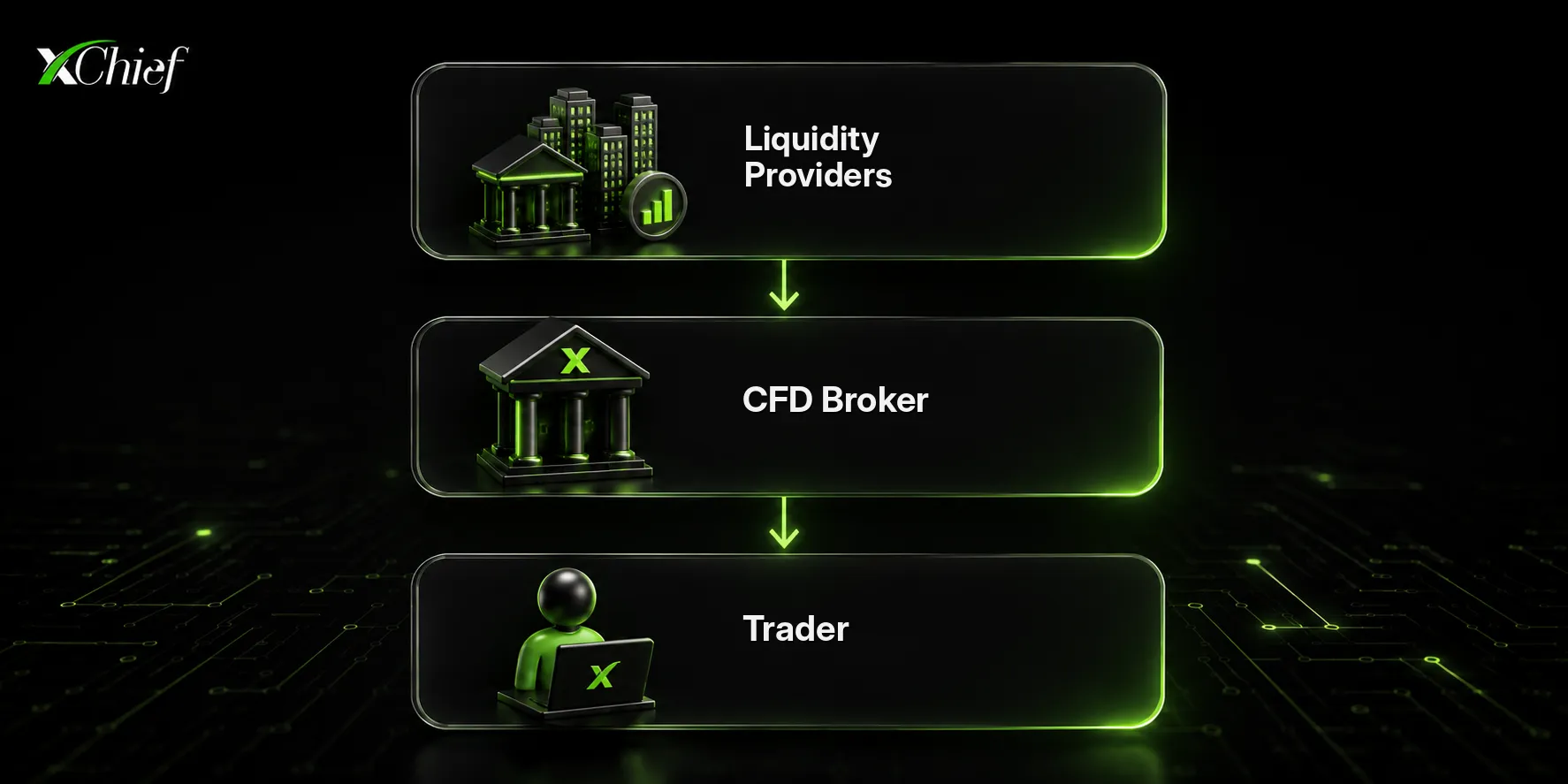
It is liquidity providers that form the market quotes a trader sees in the trading terminal.
The more liquidity providers connected to a broker, the higher the liquidity, and the easier it is to open and close trades at a price close to the market price. Although a trader doesn't interact with liquidity providers directly, they help ensure stable quotes and high-quality order execution.
That's why many brokers pass client trades on to liquidity providers. This approach is called A-Book. However, it isn't the only order execution model. Some companies use B-Book, or combine both approaches. We'll cover this below.
Regardless of the execution model, most CFD brokers earn income from several sources. Let's look at the main ones.
Main sources of income for a CFD broker
Many beginner traders assume that a broker's profit depends solely on clients' losses. In reality, brokers earn money in several ways. Let's look at the most common ones.
Spread
The spread charged by a CFD broker is one of the main sources of income.
Every trading instrument has two prices:
- Bid - the price at which you can sell the asset;
- Ask - the price at which you can buy it.
The difference between them is called the spread.
For example, for the EUR/USD currency pair, the quotes might look like this:
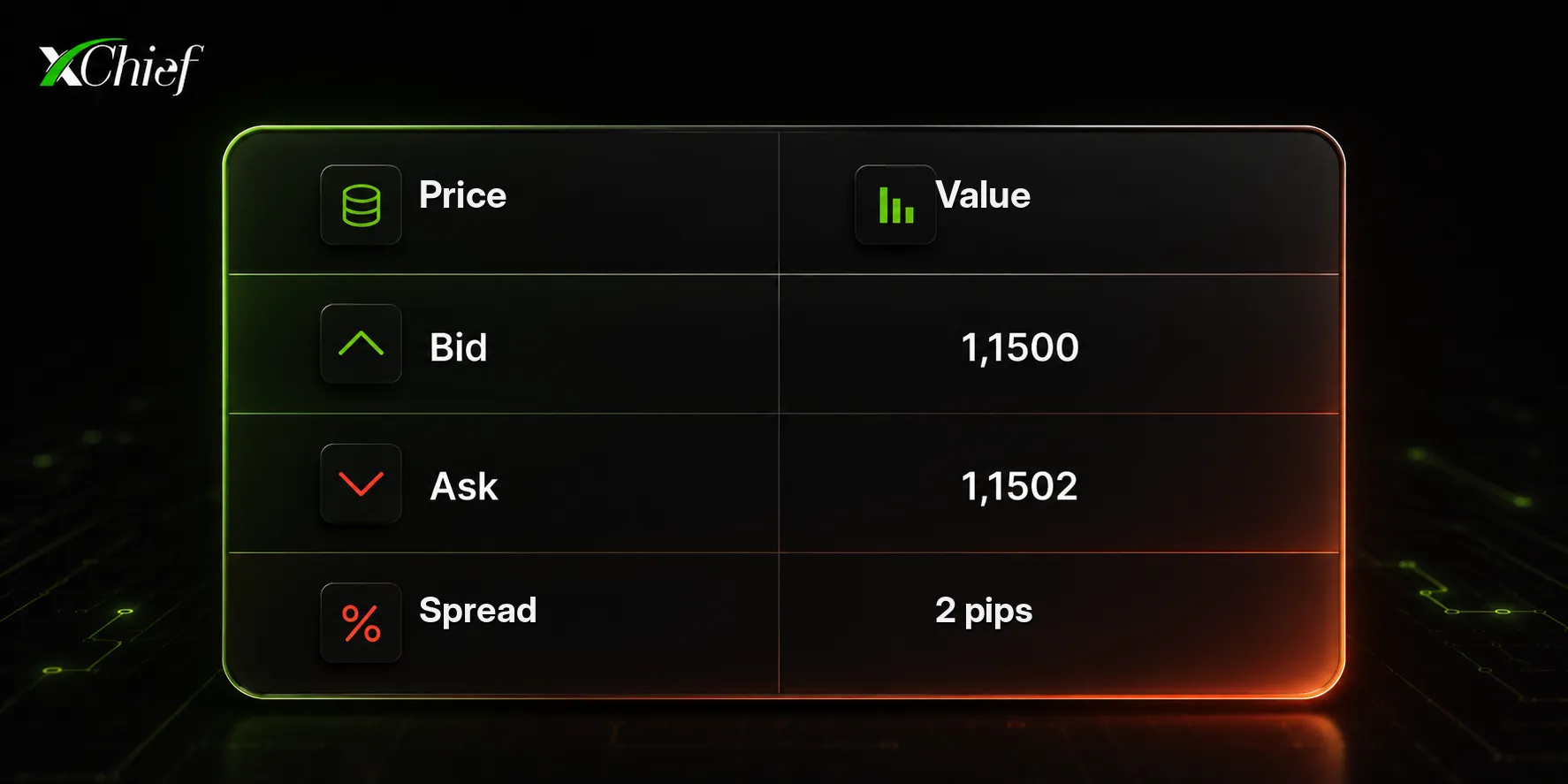
In this example, the spread is two pips.
When a trader opens a trade, they immediately pay the difference between the buy and sell price. For many brokers, this becomes one of the main sources of income.
The size of the spread largely depends on the quotes coming in from liquidity providers. That's why it can widen temporarily during periods of high volatility or reduced liquidity.
Regardless of whether the trade closes with a profit or a loss, the broker earns spread income at the moment the trade is opened.
Commissions
Some brokers charge a trading commission in addition to the spread. Three models are most commonly used:
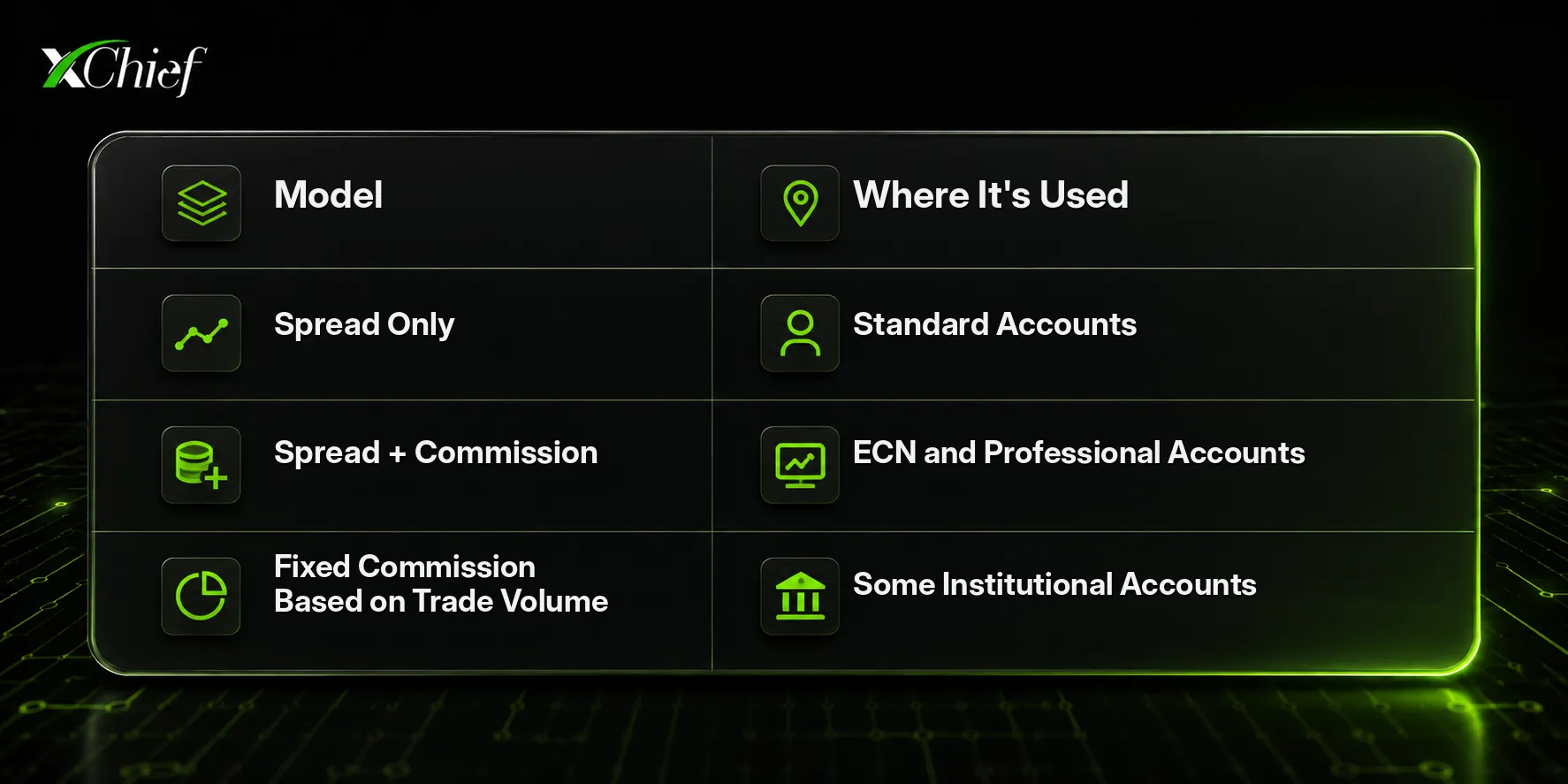
On accounts with minimal spreads, a commission is usually charged separately - for example, per traded lot.
This option is often chosen by active traders for whom the tightest possible market spreads matter most.
When choosing an account, it's important to evaluate not just the spread or commission on their own, but the overall cost of trading. For example, an account with a higher spread can sometimes work out cheaper than an account with a minimal spread plus a separate commission.
Swap
Another source of broker income is the overnight fee, or swap.
It's charged when a trader carries an open position over to the next trading day.
When trading CFDs with leverage, an overnight fee may be charged for carrying a position over to the next trading day. Its amount depends on interest rates, the type of instrument, and the specific broker's conditions.
Suppose a trader opens a long position on EUR/USD and holds it for five days. Each day, the broker charges a swap in accordance with the trading conditions for that instrument.
The swap can be:
- negative - in which case the trader pays a fee;
- positive - in which case the broker credits a small amount to the trader's account.
If you plan to hold positions for several days or longer, it's worth reviewing the swap conditions in advance.
What are A-Book and B-Book
These models are at the center of most debates. However, neither can be labeled "good" or "bad" - they simply handle client trades differently.
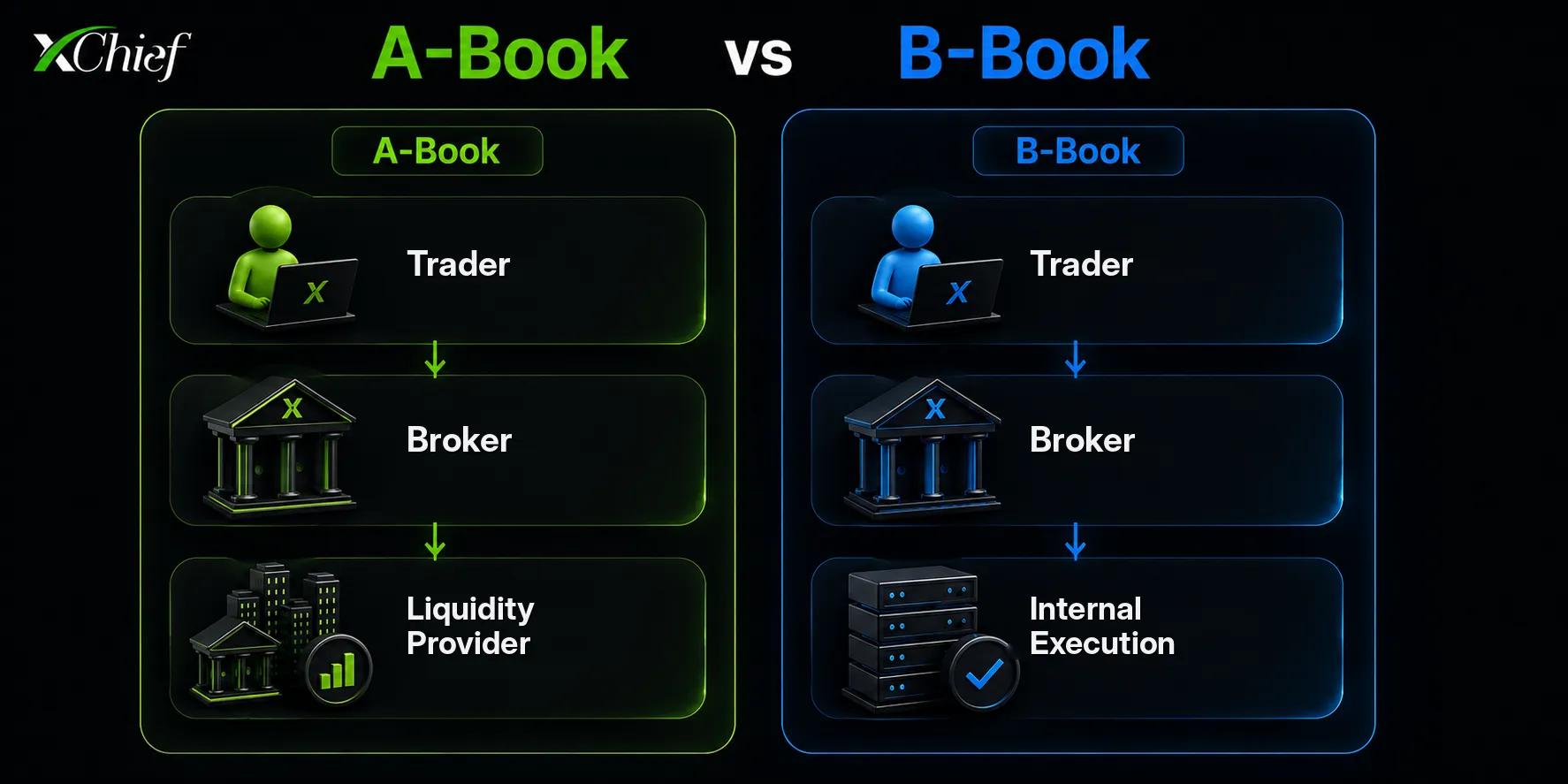
A-Book
Under the A-Book model, the broker passes client trades on to liquidity providers.
In this case:
- trades are passed on to liquidity providers;
- the broker earns mainly on spreads and commissions;
- a client's profit doesn't translate into a direct loss for the broker.
That's why many regulated brokers use the A-Book model for all or part of their client trades.
B-Book
Under the B-Book model, some client trades are executed internally by the broker. This means the broker takes on part of the market risk instead of immediately passing trades on to liquidity providers.
In this case:
- some trades are executed internally by the company;
- if the trader profits, the broker may incur a loss;
- the broker still earns income from spreads, commissions, and swaps.
But that doesn't mean the broker only earns money from client losses. Brokers manage risk not on a per-trade basis, but across the entire volume of client positions.
For example, a broker might pass only part of its trades on to liquidity providers, keeping the rest of the risk in-house. This approach allows it to manage risk more effectively.
Hybrid model
In practice, most large CFD brokers use a hybrid model, combining A-Book and B-Book.
Which model is used for a particular trade depends on internal risk management rules. Some trades are passed on to liquidity providers, while others are executed internally.
This can be influenced by:
- the client's experience;
- trade volume;
- the trading instrument;
- current market conditions;
- the overall risk level.
So the claim that any given broker operates purely on A-Book or purely on B-Book doesn't hold up in practice.
The most common myths
Myth 1. A broker always trades against the client
This isn't always the case.
Many brokers fully or partially hedge client positions through liquidity providers. In this case, the company's main income comes from spreads and commissions, not from traders' losses.
Myth 2. All CFD brokers only use B-Book
This is a common misconception.
In practice, many companies combine the A-Book and B-Book models, allocating trades according to their own risk management system.
Myth 3. If a broker earns income from the spread, it only benefits from client losses
Not necessarily.
If a broker earns mainly from spreads and commissions, it benefits from having the client keep trading for as long as possible.
A trader who regularly opens trades over several years typically brings the company more revenue than one who quickly loses their deposit and stops using the broker's services.
What to look for when choosing a CFD broker
You shouldn't focus solely on the size of the spreads. It's just as important to evaluate other factors:
- whether the broker is licensed and regulated;
- the quality of order execution, including execution speed and average slippage;
- the size of spreads and commissions;
- swap conditions;
- the number of liquidity providers;
- whether negative balance protection is offered;
- the transparency of trading conditions;
- the quality of customer support.
The more factors you take into account when choosing a broker, the higher the chance of finding a company whose conditions match your trading style.
Conclusion
A modern CFD broker is more than just an intermediary between the trader and the market. Behind its operation lies an entire infrastructure: liquidity providers, order execution technology, risk management systems, and pricing mechanisms.
Brokers don't earn money solely from client losses. Their main sources of income are spreads, commissions, and swaps, and many companies use a hybrid model that combines elements of A-Book and B-Book.
Understanding how a CFD broker business model works helps you navigate the market better and choose a company to trade with more consciously. Rather than relying on common myths, it's worth evaluating a broker's regulation, trading conditions, order execution quality, and reputation.
Frequently Asked Questions
What is a CFD broker?
A CFD broker is a company that provides access to trading contracts for difference (CFD). Through its platform, traders can open trades on the price movements of stocks, currencies, indices, commodities, and other assets without actually owning them.
How do CFD brokers make money?
The main sources of income are spreads, commissions, and swaps for carrying a position over to the next trading day. Many companies also use various risk management models, so a broker's profit doesn't always depend on client losses.
Can a broker earn money if the trader makes a profit?
Yes. If a broker earns income from spreads, commissions, and swaps, an individual client's profit doesn't mean a loss for the company. In addition, many brokers fully or partially pass trades on to liquidity providers, so a client's trading result doesn't always affect the broker's income.
Why do spreads differ between CFD brokers?
The size of the spread depends on several factors: the liquidity of the specific instrument, market volatility, the number of liquidity providers, and the broker's own pricing policy. That's why, even for the same currency pair, spreads can vary between companies.
What's the difference between the A-Book and B-Book models?
Under the A-Book model, client trades are passed on to liquidity providers, and the broker mainly earns from spreads and commissions. Under B-Book, some client trades are executed internally by the broker, so a trader's profit can become a cost for the company. In practice, many large brokers use a hybrid model that combines both approaches.
Why does slippage occur?
Slippage is the difference between the price a trader saw when submitting an order and the price at which the trade was actually opened or closed. It occurs due to changes in the market price or insufficient liquidity, and it can be either negative or positive.
Do CFD brokers charge additional fees?
Besides spreads, commissions, and swaps, some brokers may charge fees for account inactivity, withdrawals, currency conversion, or the use of certain services. The range and size of such fees depend on the specific company's terms, so it's worth reviewing the fee schedule carefully before opening an account.
How do you choose a reliable CFD broker?
When choosing a CFD broker, pay attention to whether it's licensed and regulated, the quality of order execution, the size of spreads and commissions, swap conditions, negative balance protection, the transparency of trading conditions, and the company's reputation.


