



SpaceX: business dispute or a prelude to war?
The U.S. threatens europe again
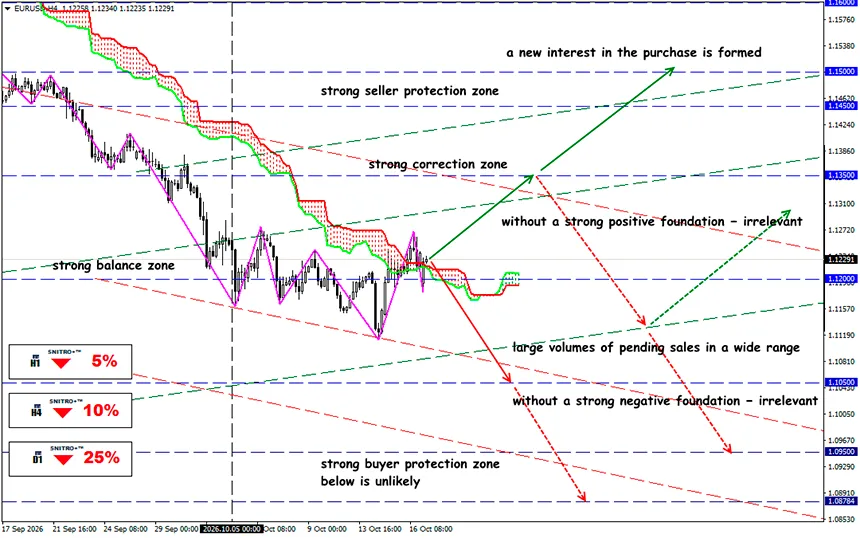
EUR/USD
Key zone: 1.1150 - 1.1270
Buy: 1.1300 (on strong positive fundamentals) ; target 1.1450-1.1500; StopLoss 1.1230
Sell: 1.1100 (on a pullback following a retest of 1.1200) ; target 1.1000-1.0950; StopLoss 1.1170
Trump warns of retaliatory measures against European businesses. SpaceX's fight for access to Europe's radio spectrum threatens to escalate into a major confrontation between the U.S. and the EU, affecting technology stocks, telecommunications, and artificial intelligence investment. Regulatory and geopolitical risks are rising.
The U.S. administration has warned Brussels of possible severe retaliatory measures if European regulators restrict American companies' access to strategically important segments of the satellite communications market.
A quick recap:
The dispute centers on a European Commission proposal dated May 27, 2026, which calls for an overhaul of the system governing mobile satellite operators' access to Europe's radio spectrum.
The existing framework for allocating spectrum rights was established in 2008, and the relevant authorizations are scheduled to expire in May 2027. The proposed regulations aim to adapt the European market to the development of low Earth orbit satellite constellations and Direct-to-Device (D2D) technology, which allows ordinary smartphones to connect directly to satellite networks.
For financial markets, the significance of this dispute extends far beyond satellite communications.
- Washington is effectively challenging the acceptable limits of European technological protectionism, while Brussels is seeking to reduce critical infrastructure's dependence on foreign suppliers.
- The disagreements could affect cloud computing, artificial intelligence, telecommunications, and digital platforms — industries in which U.S. corporations hold leading positions.
- The economic significance of the dispute stems from the scarcity of radio spectrum. Access to spectrum creates long-term competitive advantages, affects network capacity and subscriber service costs, and determines the potential for scaling satellite services.
- The confrontation over SpaceX is part of the EU's broader strategy to strengthen technological sovereignty.
The major companies whose positions could be affected include Microsoft, Amazon, and Alphabet. Their cloud divisions — Azure, AWS, and Google Cloud — compete for corporate and government contracts, including artificial intelligence infrastructure projects.
Disagreements between the U.S. and the EU extend beyond the satellite market. In April 2025, the European Commission fined Apple €500 million and Meta Platforms €200 million for violating Digital Markets Act (DMA) requirements. On July 23, 2026, Google received two additional fines totaling €890 million for violations of competition rules and restrictions on third-party companies' ability to direct consumers to alternative channels for purchasing services.
The U.S. views substantial fines and additional restrictions as potential obstacles to investment and competition.
The main economic risk for Europe is that the cost of digital infrastructure could rise faster than the development of its domestic technological capabilities. The conflict is already accompanied by concrete corporate initiatives.
Major telecommunications operators Deutsche Telekom, Orange, Telefónica, and Vodafone have signed a letter of intent to jointly seek access to the 2 GHz spectrum band for the development of mobile satellite communications. Eutelsat could potentially benefit from Europe's policy of diversifying satellite service providers.
So What Is the Outcome?
If Washington begins imposing trade restrictions, European industrial companies, automakers, and consumer goods exporters could come under pressure.
Over the medium term, the dispute could accelerate the reallocation of investment toward European digital infrastructure while simultaneously increasing costs for international technology companies.
Traders could consider short positions in the Nasdaq 100 and European export-oriented stocks following confirmed breaks below significant support levels.
For EUR/USD, a bearish signal requires confirmation from stronger demand for the dollar and deteriorating European macroeconomic expectations. Short positions may be considered after a break below local support, confirmed by a strengthening DXY and a widening yield differential in favor of the United States.
If a diplomatic compromise is reached and Treasury yields decline, traders should consider the opposite scenario.
So we act wisely and avoid unnecessary risks.
Profits to y’all!


