

















Oil is falling, but the market is stabilizing
The Ceasefire is reducing the risk premium
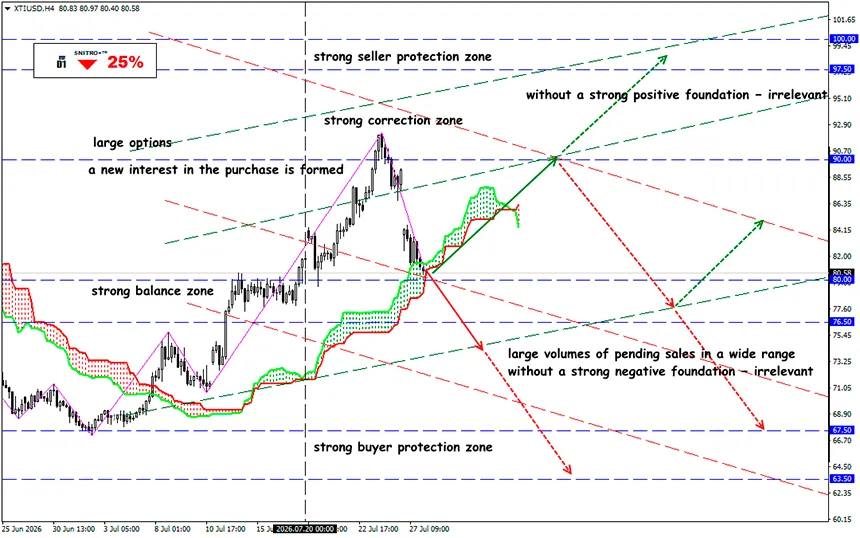
XTI/USD
Key zone: 80.00 - 85.00
Buy: 87.50 (on strong positive fundamentals); target 90.00-93.50; StopLoss 86.80
Sell: 78.50 (on a pullback following a correction); target 73.50; StopLoss 79.20
After the United States and Iran suspended mutual attacks, the market reduced its concerns about disruptions to oil exports from the Middle East. WTI is testing the $80 area, while Brent has retreated toward $84. The pause in the conflict remains extremely fragile, and shipping through the Strait of Hormuz has not returned to normal, leaving oil vulnerable to renewed geopolitical volatility.
To recap:
- All previous interim agreements between the United States and Iran collapsed because of Iranian attacks on tankers and retaliatory U.S. airstrikes.
- The latest EIA report supported sellers: U.S. commercial crude oil inventories increased by 2.0 million barrels in the week ending July 17, reaching 411.7 million barrels. Gasoline inventories rose by 0.8 million barrels, while distillate stocks increased by 1.4 million barrels.
- Despite this increase, oil inventories remain 6% below the five-year seasonal average. In other words, there is no excess supply in the physical market, although the latest weekly data weakened the short-term bullish case.
- The EIA expects Middle Eastern production and trade flows to gradually return to pre-conflict levels, but estimates that about 1.4 million barrels per day may remain off the market throughout the fourth quarter.
Iran and Oman are currently negotiating the resumption of shipping through the Strait of Hormuz.
- If an agreement is reached, it could open the way for direct negotiations between Iran and the United States on ending the war.
- The talks are being mediated by Oman, with Qatar, Pakistan, Egypt, and Trump’s special envoys also involved.
- Omani negotiators are optimistic and hope to announce progress in the coming days, although there are no guarantees.
Despite Washington’s optimistic tone, officials in Tehran say that no formal negotiations are taking place, underscoring the uncertainty surrounding the latest diplomatic efforts.
Dow futures rose by 1.01%, S&P 500 futures gained 0.98%, and Nasdaq 100 futures advanced by 1.63%. Falling oil prices eased some of the inflation concerns that had recently pushed U.S. Treasury yields higher.
The probability of a Federal Reserve rate hike declined as oil prices pulled back, although inflation remains above the Fed’s 2% target and energy-related supply shocks continue to concern policymakers. Attention should now shift to the FOMC decision, second-quarter GDP data, and the latest PCE price index for signals about U.S. demand and interest rate expectations.
What does this mean?
Negotiations are continuing, and there is hope that the strait will be reopened, but military and political risks remain. Success depends on the parties’ willingness to compromise and on concrete action to clear the area of mines.
The decline in crude oil prices brought immediate relief to equity markets. Lower energy costs eased concerns that renewed inflationary pressure could complicate the Federal Reserve’s policy outlook and weigh on corporate earnings. The Fed’s decision this week could determine the market’s direction through the end of the summer.
So we act wisely and avoid unnecessary risks.
Profits to y’all!


