

















"Free" money is becoming more expensive.
Bond Sell-Off Accelerates
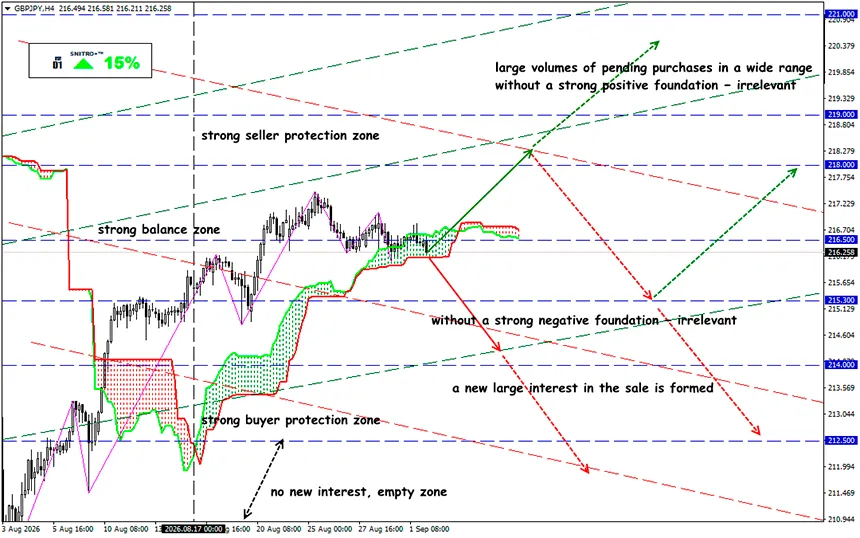
GBP/JPY
Key zone: 216.00 - 217.00
Buy: 217.20 (on a confident breakout above 217.00); target 219.00; StopLoss 216.50
Sell: 215.50 (on strong negative fundamentals); target 214.00-213.50; StopLoss 216.20
Global bonds suffered a sharp decline, continuing a trend that is pushing borrowing costs to multi-year highs. The market is trying to maintain the global balance through higher mortgage and other lending rates.
The main reason is the Middle East crisis, which is pushing energy prices higher and increasing investor concerns about inflation and the rapid growth of government debt.
A reminder:
Sovereign interest rates serve as a benchmark for the pricing of financial assets. A rise in the cost of money leads to higher mortgage rates for consumers and complicates government spending decisions.
- The yield on 10-year U.S. Treasury bonds reached an almost three-year high of 4.81%..A rise in yields above 5% will intensify panic in already unstable stock markets.
- The yield on 10-year Japanese bonds exceeded 3%, reaching a 30-year high.
- In Australia, 10-year government bond yields rose to 5.198%, the highest level in more than 15 years.
- German government bond (bund) futures fell by 0.35%, reaching their lowest level since 2011.
- French OAT bond futures fell by 0.37%, reaching a record low.
- British bond yields on Tuesday reached their highest level since 2008.
Massive bond sales by large technology companies actively raising funds for artificial intelligence development increased pressure on the market. The activity is linked to the "bond vigilantes" — investors who seek to impose greater financial discipline on governments considered spendthrift and demand higher yields on their bonds.
Last month, Scott Bessent and the U.S. Treasury took measures to limit the rise in long-term bond yields, but the market has almost completely reversed the result: the yield on 30-year Treasuries returned to the level that had forced the authorities to intervene in the first place
Investors are now closely watching the Fed's actions in fighting inflation, which remains above the central bank's 2% target. Warsh's hawkish statements last week led to an increase in traders' expectations for interest rate hikes.
Traders have already priced in a possible interest rate hike in Europe next week, as well as an approximately 68% probability of a similar move in the U.S. one week later.
So what is the result?
The accelerating bond sell-off increases the likelihood that pressure on stocks and other risk assets will persist, especially if Treasury yields continue to rise. Markets with high debt burdens remain the most vulnerable.
- US Treasuries: Predominantly short. A breakout above 5% in yields would be a strong bearish signal and an additional factor putting pressure on stocks.
- USD: The short-term trend is bearish. If geopolitical demand for safe-haven assets persists, buying USD on pullbacks is preferable, especially against currencies with weaker fundamental support.
- U.S. indices: very cautious buying. NASDAQ is especially vulnerable.
- Technology sector: Cautious buying. Large-scale borrowing by AI companies simultaneously increases the supply of corporate debt and pressure on the cost of capital. This creates an additional risk for highly valued technology stocks.
- Oil: Geopolitical escalation and the risk of supply disruptions support Brent; a rise above $95 increases inflationary pressure and at the same time raises the likelihood of tighter central bank policy.
- Gold: Buying can be considered after a confirmed reversal in yields to the downside.
- JPY: Extremely high risk. JGB yields above 3% and expectations of further tightening by the Bank of Japan create the threat of a sharp reversal in carry trades and increased volatility in JPY pairs.
Key trading decisions should track the yield → dollar → stocks → oil relationship as closely as possible. Right now, it is especially important not to open positions based on just one asset, but to trade this intermarket relationship itself.
So let's act reasonably and avoid taking unnecessary risks.
Profits to everyone!


