

















Crypto IPOs: a trap for investors
Why the market no longer believes in high-profile listings
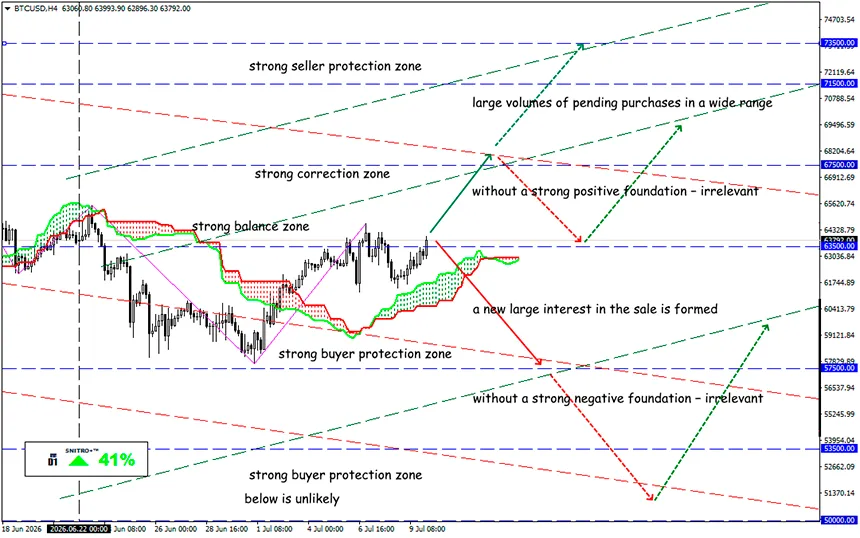
BTC/USD
Key zone: 61,750 - 65,000
Buy: 65,500 (on strong positive fundamentals); target 67,500-71,500; StopLoss 64,500
Sell: 61,500 (on a pullback following a retest of 63,500) ; target 58,500-57,500; StopLoss 62,500
Just a few years ago, a cryptocurrency company going public was viewed as the ultimate sign that the industry had been accepted by traditional finance. An IPO meant not only raising capital but also proving that a business met the standards of the public market. Today, however, public-company status no longer guarantees either rising share prices or investor confidence.
Where investors were once willing to pay a substantial premium simply for exposure to tokenization, Web3, or digital asset infrastructure, they are now focused on profitability, resilient cash flows, and a company's ability to survive the next market downturn.
The euphoria faded faster than issuers expected.
Reminder:
According to 10x Research, the shares of most major crypto companies that went public in recent years have fallen sharply from their post-listing highs. The sample includes Coinbase, Circle, Bullish, Gemini, BitGo, Amber, Figure, and Securitize. On average, these stocks have lost about 73% of their value compared with their peak prices. For early investors, these shares turned out to be not a successful investment but a painful reminder of how quickly market hype can collide with reality.
In practice, every IPO is a bet on a company's future. At first glance, crypto companies resemble fast-growing technology startups. However, there are several fundamental differences.
- A significant portion of their revenue depends directly on activity in the cryptocurrency market. When trading volumes decline, exchange fee income falls, fewer new tokens are issued, and demand for infrastructure services weakens.
- Many companies continue to hold substantial amounts of digital assets on their balance sheets. As a result, their financial statements remain highly volatile even when their core operations are stable.
- The industry remains highly sensitive to regulatory changes. New requirements introduced by the SEC, European regulators, or central banks can significantly reshape the economics of these businesses.
As a result, investors demand a higher risk premium than they do for traditional fintech companies.
Despite the market slowdown, interest in public offerings remains. Kraken, Ledger, Consensys, BitGo, and Gemini have previously announced plans to go public. Blockchain.com has also confidentially filed for a U.S. listing.
However, institutional investors are now expected to focus primarily on several key metrics when evaluating new IPOs:
- Revenue stability.
- Diversification of revenue sources.
- Operating profitability.
- Cash flow.
- The ability to remain profitable during crypto market downturns.
- Corporate governance quality.
- Financial reporting transparency.
In effect, crypto companies are now being held to the same standards as traditional financial institutions.
What does this mean?
The cryptocurrency market has matured. The stablecoin market continues to expand, institutional investors are making greater use of digital assets, and tokenization is gradually moving beyond experimental projects.
However, this no longer guarantees automatic gains for every company in the sector. Many crypto firms have begun postponing or reconsidering their listing plans amid weak market conditions and the disappointing performance of recently listed companies.
A compelling narrative can lift a stock price only for a limited period. Investors are increasingly distinguishing genuinely sustainable business models from companies whose valuations are driven primarily by expectations.
Over the long term, a company's value is determined not by fashionable technologies but by its ability to generate consistent earnings, grow profits, and create shareholder value. Crypto companies will undoubtedly continue trying to sell the market the story of the "next gold rush," but investors have already seen how buying at the peak of expectations can end.
So we act wisely and avoid unnecessary risks.
Profits to y’all!


