



Weak NFP changes the rate outlook
How the labor market spooked the dollar
EUR/USD
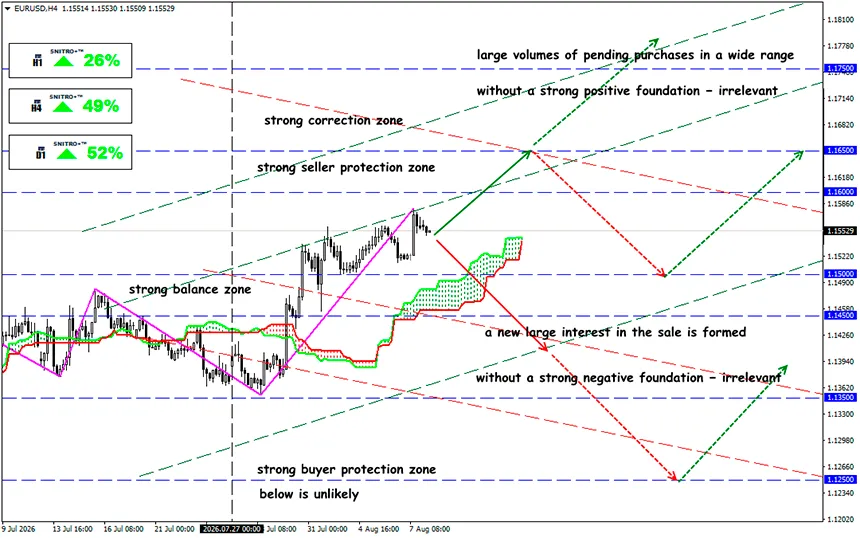
Key zone: 1.1500 - 1.1600
Buy: 1.1620 (after a confident breakout of the 1.1600 level); target 1.1750-1.1820; StopLoss 1.1550
Sell: 1.1480 (amid strong negative fundamental factors); target 1.1350-1.1300; StopLoss 1.1550
It turns out that the U.S. labor market is just as weak as it was at the end of 2025, when the Fed cut rates three times. What monetary tightening can we even talk about if employment has grown by a modest average of just 44,000 jobs per month over the past six months? In July, employment fell by 23,000, which, combined with downward revisions to the May–June data, came as a real shock to financial markets.
Let’s recap:
The U.S. dollar touched a seven-week low after an unpleasant surprise from the labor market. Employment unexpectedly fell by 23,000 in July. May data was revised from 129,000 to 63,000, while June was revised from 57,000 to 20,000. As a result, the U.S. economy has added an average of just 44,000 jobs per month over the past six months. The last time the numbers were this weak, the Fed was cutting rates.
The futures market reduced the probability of monetary policy tightening in September to 46%, down from 67% a week earlier. The odds of two rate hikes in 2026 fell from 46% to 32%. This weakened the U.S. dollar against major global currencies.
EUR/USD surged to its highest level since June 17, when Kevin Warsh surprised everyone with his hawkish rhetoric.
- The market’s view of the Fed Chair changed significantly after he presented his concept that monetary policy tightening could be achieved by pushing Treasury yields higher. At the same time, the Treasury intends to bring those same yields down. Kevin Warsh insists on reducing the balance sheet, while the Treasury would not mind expanding it for currency interventions.
- Numerous contradictions, combined with reports of Trump’s regular communication with his protégé and renewed White House pressure on the Fed through another attempt to remove Lisa Cook, are raising serious doubts about the central bank’s independence and encouraging traders to reduce speculative long positions in the U.S. dollar.
- The disappointing labor market report will now almost certainly curb the appetite of FOMC hawks for rate hikes. The futures market raised the probability of rates remaining unchanged in September from 33% to 53%, dealing a crushing blow to the greenback.
- Incidentally, USD/JPY bears tried to capitalize on the dollar’s weakness following the employment data. The pair fell below 157, which speculators immediately took advantage of. The wide interest-rate differential between the Fed and the Bank of Japan creates ideal conditions for carry trades and for selling the yen as a funding currency. The dollar quickly returned above ¥158 and risks extending its rally.
As long as the Middle East continues to burn, the U.S. dollar still has a chance.
Tehran understands that Trump is eager to exit the Middle East conflict because of falling Republican approval ratings and is testing the White House occupant’s patience. Iran has announced its readiness to reach a deal with Oman to reopen the Strait of Hormuz, provided an extraordinary set of conditions is met — from lifting sanctions to billions of dollars in reparations and the withdrawal of U.S. troops from the region. It is doubtful that Washington will agree, increasing the risk of further escalation and supporting the U.S. dollar as a safe-haven asset.
So, what does this mean?
The labor market data is contradictory. While employment is growing so slowly that it resembles a recession, unemployment continues to decline. This combination gives the Fed an opportunity to do exactly what it has said it would do — wait for inflation data. The July consumer price report could make just as big a splash in the markets as the decline in NFP.
Nevertheless, EUR bears managed to regain their footing. The strategy targeting a return of EUR/USD to the 1.15–1.1565 range has played out. An increase in geopolitical risks would provide an opportunity to add to short positions. Otherwise, there is a strong chance of consolidation within the 1.154–1.16 trading range until the inflation data is released.
So we act wisely and avoid unnecessary risks.
Profits to y’all!


