



The Yen as an instrument of failed policy
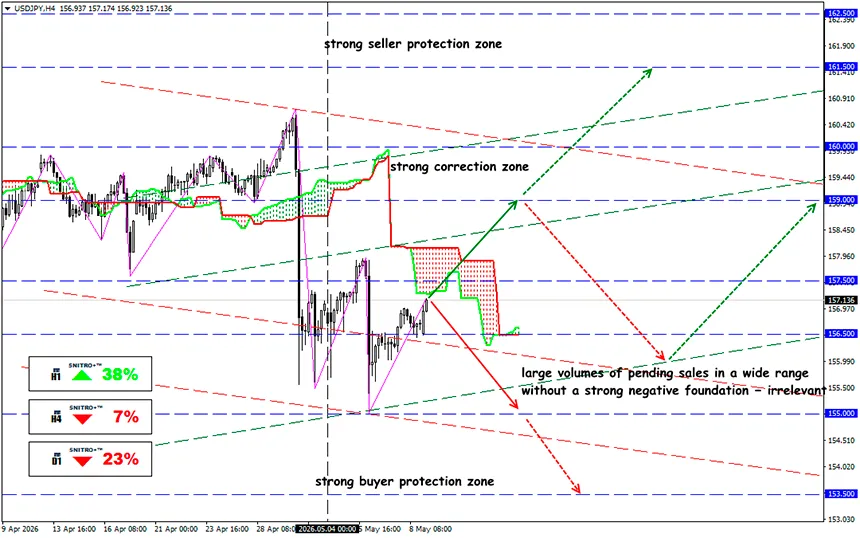
A new attempt to control the Japanese market
USD/JPY
Key zone: 156.50 - 157.50
Buy: 158.00 (on strong positive fundamentals) ; target 159.50-160.00; StopLoss 157.50
Sell: 156.00 (after retesting 156.50) ; target 154.50-153.50; StopLoss 156.50
Japan intervened in the foreign exchange market during the “Golden Week” holidays in early May to support the yen. This corresponds to the traditional practice of the BOJ — conducting currency interventions during holiday periods, taking advantage of low market liquidity.
The intervention primarily involves the Bank of Japan purchasing yen in the foreign exchange markets. Previously, the central bank also conducted interventions to offset the impact of the war in Iran on the yen exchange rate.
The result of these actions was a sharp liquidation of net short positions in the yen, which reduced speculative pressure, but it has so far failed to break the overall weakening trend against the U.S. dollar.
Another currency intervention by the Bank of Japan is slowing the pace of the yen’s decline, but the monetary regulator’s actions were aimed at “buying time” rather than ensuring a sustainable recovery of the Japanese currency.
Reminder:
The central bank’s intervention followed after USD/JPY exceeded the 160.5 mark at the end of April — the weakest yen level in recent decades. Within several hours, the pair fell by more than 3%, triggering assumptions that Japan’s Ministry of Finance spent around ¥5.5 trillion ($35 billion) to support the currency. Subsequent interventions may have added another approximately ¥5 trillion.
- Several tough economic factors continue to pressure the yen. Low interest rates make the currency less attractive to global investors seeking higher returns.
- A weak yen leads to rising import costs, primarily for energy resources, which intensifies inflationary pressure and increases the burden on government fuel subsidies.
- Financial markets have already priced in most of the BOJ’s expected rate hikes, limiting the potential effect of further monetary policy tightening.
- A Bank of Japan rate hike in June is likely; however, monetary policy still lags behind economic realities, limiting long-term support for the yen.
- An additional pressure factor is large speculative positions by private capital against the yen.
Currency interventions can trigger short-term rallies and force traders to close short positions, but historical experience proves that such market manipulations rarely create a sustainable upward trend without support from stronger economic fundamentals.
Any temporary strengthening of the yen linked to upcoming U.S.-Japan negotiations or coordinated political signals may become a selling opportunity for traders expecting the broader downward trend to continue.
USD/JPY has all the prerequisites to return to the 160–165 range in the coming months.
So we act wisely and avoid unnecessary risks.
Profits to y’all!


