



The takaichi factor deepens the problem

Why the yen is weakening
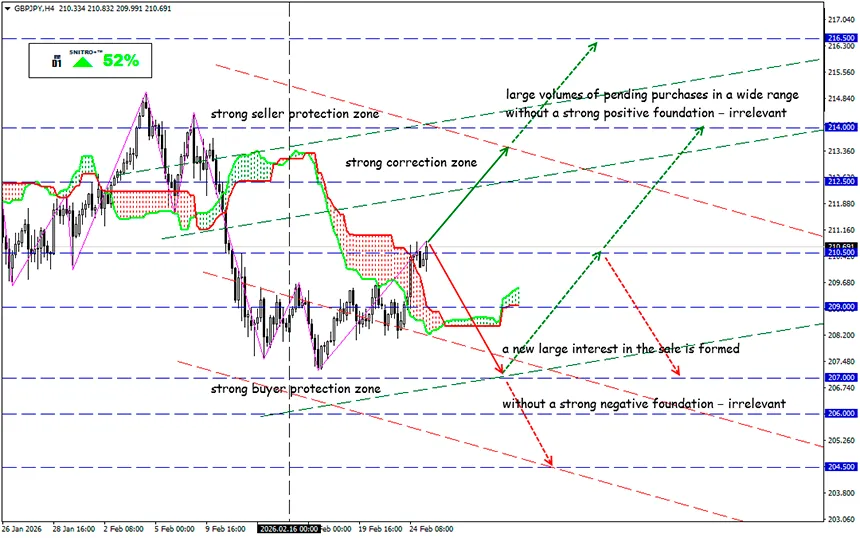
GBP/JPY
Key zone: 209.50- 211.00
Buy: 211.50 (on strong positive fundamentals); target 214.00; StopLoss 210.80
Sell: 209.00 (after retesting the 209.50 level) ; target 207.00-206.50; StopLoss 209.70
USD/JPY has been rising rapidly for a week, even as the dollar index calmly drifts near the 98 level. This dynamic is driven by several fundamental factors that are interconnected.
The catalyst for the decline was a publication in the Mainichi newspaper, citing anonymous sources, which reported that Prime Minister Takaichi, during a meeting with BOJ Governor Kazuo Ueda on February 16, expressed serious doubts about the need for further rate hikes. Officially, Ueda described the meeting as a general exchange of views, but sources claim otherwise.
The information is unofficial, but highly credible. The Prime Minister is a supporter of the so-called “Abenomics,” which is based on economic stimulus (through aggressive government spending) and monetary easing.
Reminder:
At the beginning of February, Sanae Takaichi strengthened her power: the ruling Liberal Democratic Party she leads secured a constitutional majority in the lower house, winning 316 out of 465 seats.
The cabinet has already begun preparing a reduction of the consumer tax on food from the current 8% to zero, despite the fact that this decision will lead to annual tax revenue losses of around ¥5 trillion.
Earlier, the Prime Minister approved a massive stimulus package worth ¥21.3 trillion.
It is logical that such aggressive reforms require support from the Bank of Japan in the form of loose monetary policy.
That is why the market took the insider information seriously while ignoring the official press release. Inflation and economic growth dynamics in Japan call into question the feasibility of rate hikes at the upcoming meetings in March or April.
- The nationwide consumer price index fell in January to 1.5%, from the previous 2.1% (forecast: 1.6%) — the lowest level since 2022.
- Core CPI, excluding fresh food prices, declined to 2.0% (the lowest since March 2022).
- CPI excluding food and energy slowed to 2.6%.
- GDP in Q4 last year grew only 0.1% quarter-on-quarter, significantly below forecasts (+0.4%).
- On an annual basis, Japan’s economy grew just 0.2%.
This dynamic is driven by a crisis in consumer demand, foreign trade barriers (U.S. protectionism + diplomatic conflict with China), and reduced government investment.
The current fundamental backdrop is putting significant pressure on the yen and supporting USD/JPY buyers.
Opinions within Japan’s economic community are extremely pessimistic. Former BOJ Governor Kuroda openly calls for rate hikes, arguing that the new government’s fiscal measures will lead to higher inflation.
The situation has worsened due to personnel decisions. The government nominated two academics — Toichiro Asada and Ayano Sato — to the Bank of Japan board. Both are known as “reflationists,” supporters of loose monetary policy and active government spending. They consider a weak yen beneficial for the economy.
What is the result?
If your trading interests involve the yen, it is essential to monitor official rhetoric. If the government openly lobbies for low rates, it is a negative factor for the yen in the medium term. Inflationary pressure on the currency remains, but this factor is currently being ignored.
From a technical perspective, USD/JPY has broken the key resistance level at 155.00 and firmly consolidated above it. Strong verbal interventions from the U.S. are still restraining speculators, but political intrigue could push the price above the critical 160 level.
So we act wisely and avoid unnecessary risks.
Profits to y’all!


