



The Stock market rally is hindering the Fed
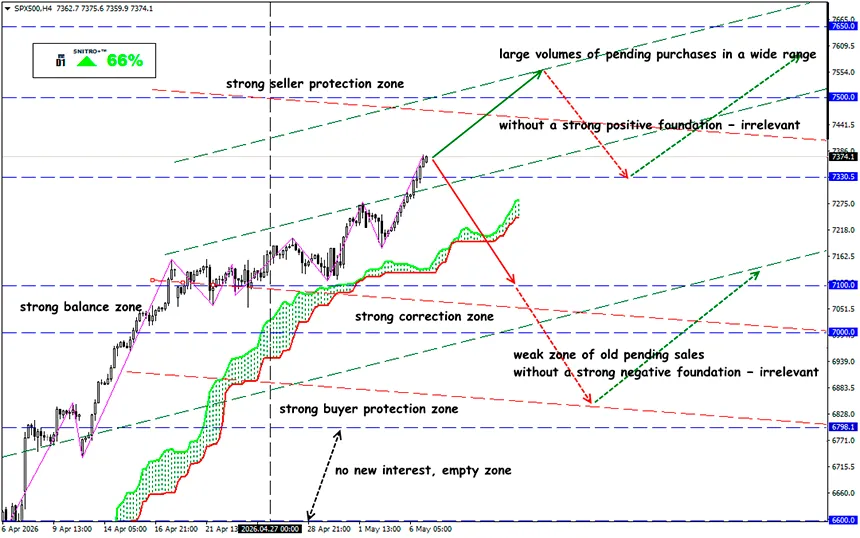
The U.S. stock market believes in political optimism
SP500
Key zone: 7,250 - 7,350
Buy: 7,400(after retest of level 7,330); target 7,550-7,650; StopLoss 7,330
Sell: 7,200 (on a strong negative foundation); target 7,000-6,850; StopLoss 7,270
The ceasefire factor in the Middle East triggered another wave of optimism — stock indices climbed another 1.5–2%. Long-term U.S. government bonds also appreciated, while lower interest rates pushed gold prices above $4,700. At the same time, oil fell to $96–102, negatively affecting oil company shares.
According to media reports, the parties to the conflict are close to a 14-point framework memorandum. It could reopen the Strait of Hormuz and become the basis for further negotiations on the nuclear program.
S&P 500 futures in premarket trading have not yet decided on direction.
Reminder:
U.S. equities are currently supported by profitability strength and AI investment flows rather than by Fed support. But if inflation surges again or the labor market remains too “hot,” pressure from high interest rates could become a problem, especially for small-cap stocks and rate-sensitive sectors.
- The record rally in the U.S. stock market is now facing a serious obstacle: the market has almost completely lost hope for Federal Reserve rate cuts this year.
- A resilient economy, stable labor market, and oil prices above $100 are reinforcing expectations that the regulator’s next move could be a rate hike rather than a cut.
- The rebound in global equity markets after the decline caused by the Iran conflict was so limited that the market is now ready for further upside even on minor positive news.
- Strong corporate earnings growth continues to support indices and prevents the market from entering a fear phase.
Yesterday’s post-market session focused on corporate stories. AMD shares surged more than 16% after strong earnings and positive guidance. Super Micro Computer gained around 18% amid confident profit forecasts, while Arista Networks lost nearly 12% due to weak margin performance.
In the United States, price growth is almost entirely driven by major technology companies. Although Europe offers greater diversification, the lack of large tech giants leaves three energy companies as the primary driver, accounting for 40% of returns.
In the near term, growth will remain stable but limited, with recovery in technology stocks becoming the key factor. Escalation of the Middle East conflict could increase the likelihood of its resolution on terms unfavorable to the United States. This is tied to rising gasoline prices in the U.S., negative polling results among American voters, and tensions in relations with the main consumers of Iranian oil.
We expect speculative volatility, but investors with long-term plans should use current declines in stock prices to buy and increase their market exposure.
So we act wisely and avoid unnecessary risks.
Profits to y’all!


