



The Petrodollar is losing its arguments
A New crisis in the global oil trade system
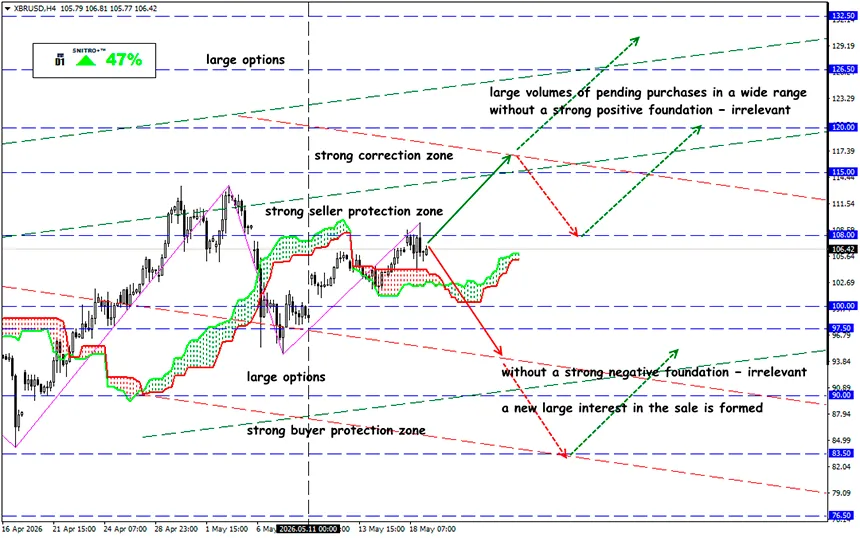
XBR/USD
Key zone: 105.00 - 108.00
Buy: 108.50 (on a pullback following a retest of 106.50); target 110.50-112.50; StopLoss 107.80
Sell: 104.50 (against a strong negative fundamental backdrop); target 102.50-100.00; StopLoss 105.20
The global oil trading system, in which the U.S. dollar has dominated for several decades, is facing real challenges due to the conflict with Iran and the closure of the Strait of Hormuz. Governments of major consuming countries are entering increasingly opaque deals with Tehran and producers from the Persian Gulf to guarantee stable supplies.
Reminder:
The current oil trading structure was created in the 1970s–1980s to prevent market fragmentation and move away from variable pricing set by petroleum product producers. Oil futures markets in New York and London guaranteed transparency and liquidity for the system.
- The dominance of the petrodollar gave the United States unprecedented influence over the global economy, allowing it to impose sanctions that isolate countries, companies, and individuals from international trade.
- The U.S. actively used sanctions against Iran, Venezuela, Russia, and China to achieve geopolitical and economic goals.
- Fear of falling under U.S. sanctions is forcing major emerging economies to seek alternative trading mechanisms that bypass the dollar and Western maritime transport. However, these efforts remain limited: according to estimates, only 10–20% of global oil trade is conducted in currencies other than the dollar.
After February 28, due to disrupted logistics, approximately 25% of global supplies from the Persian Gulf were lost to the world market, particularly affecting Asian countries, which depend on imports from the region for approximately 60% of their needs.
The blockade of the Strait of Hormuz has now lasted for 13 weeks. Major importers are trying to adapt by signing direct agreements with producers from Persian Gulf countries to secure stable supplies of oil, chemicals, and fertilizers.
For example, in 2023, India and the UAE concluded an agreement on settlements in rupees and dirhams instead of dollars. Last Friday, Indian Prime Minister Narendra Modi again visited Abu Dhabi to discuss long-term supply agreements and the expansion of strategic storage facilities.
In recent days, several oil tankers crossed the Strait of Hormuz, often with tracking systems switched off to avoid detection. The exact structure of these official (and not entirely official!) deals remains opaque. Many are likely concluded either using currencies other than the U.S. dollar or through informal barter arrangements. Cryptocurrency settlements are also on the agenda.
Regardless of whether these deals include transit fees benefiting Tehran (which politicians continue to deny), such a scheme strengthens Iran’s de facto control over cargo movement.
And what is the result?
Supply disruptions from the Middle East have strengthened the position of the United States as a leading producer of oil and gas, and Washington will likely maintain its dominant role in the global economy for decades. Replacing the dollar with a single alternative currency is unlikely.
- The situation requires pricing mechanisms that will protect buyers from political market blackmail and ensure stable supplies through the Strait of Hormuz.
- Given that Asia consumes more than 30% of global oil and imports more than half of it, any moves toward bilateral trade arrangements in the region may lead to fragmentation of the global energy market.
- The consequences of the war with Iran may lead to fragmented oil pricing, reduced transparency, and weaker U.S. control over the financial system that supported international oil trade for decades.
This creates new room for speculative trading.
So we act wisely and avoid unnecessary risks.
Profits to y’all!


