



2025 Results: the commodity market is tired of speculators

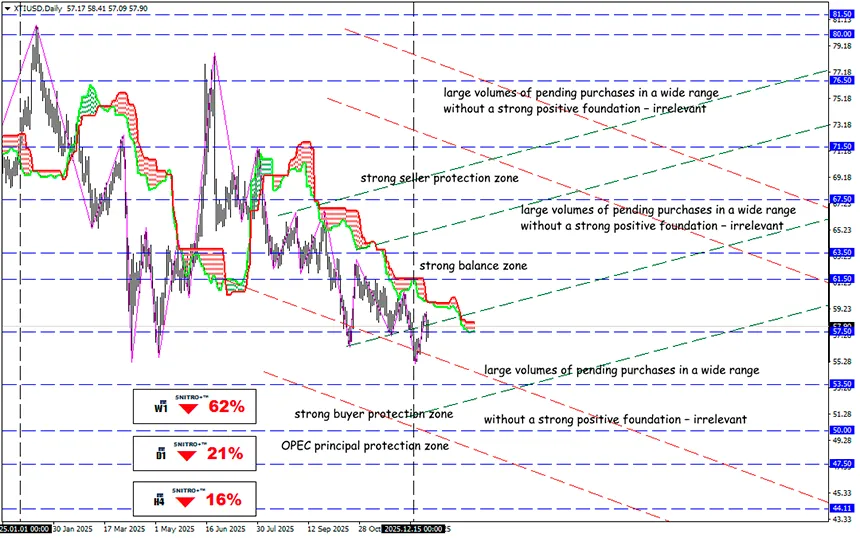
Commodities as Victims of Market Imbalance
The past year became a large-scale experiment in trend divergence for commodity markets. The US dollar was not just a currency, but the main filter through which commodity prices were evaluated.
Breaking with the classical rule that most commodities move in the same direction, the market split into two distinct regimes:
- energy commodities (oil and gas) were mainly pressured by physical supply-and-demand fundamentals;
- precious metals (gold and silver) posted strong gains amid macroeconomic and political risks.
This divergence clearly showed that the commodity market has stopped being a “single asset class” and now operates under different pricing logics.
The key backdrop throughout the year was US dollar weakness and shifting expectations regarding Federal Reserve policy. The market gradually moved away from the “higher for longer” rate narrative toward expectations of future monetary easing. This fundamentally changed investor behavior across commodity assets.
For gold and silver, a weak dollar became a powerful growth driver. For oil and gas, the dollar’s influence was secondary and could not offset demand weakness and excess supply.
Oil (Brent/WTI) spent the year under pressure from oversupply, weak demand, and gradual changes in OPEC+ policy. Natural gas handled dollar pressure more easily, as US gas prices and derivatives are driven more by weather, inventories, production, and LNG exports than by currency dynamics. Moreover, OPEC does not directly control Henry Hub pricing. However, the link exists indirectly — through oil-indexed gas contracts and associated gas from oil production.
US economic and trade policy became an additional source of pressure and instability:
- tariffs and threats of trade conflicts;
- aggressive sanctions policy;
- conflicts involving specific commodity suppliers (such as Iran or Venezuela).
Energy markets interpreted these factors as risks to global growth, while metals treated them as reasons to protect capital. The same factors pressured oil but supported gold and silver.
As a result, geopolitical events caused volatility spikes but rarely produced sustainable trends unless backed by real physical shortages.
Rising uncertainty failed to support energy markets but strengthened demand for metals.
For traders, this year delivered a critical lesson: the same analytical logic cannot be applied across different commodity markets, even when reacting to identical news. As a result:
- the commodity market has become fragmented;
- the dollar and Fed expectations define the overall macro backdrop;
- oil and gas trade based on physical balances, not informational noise;
- gold and silver price in virtually any form of market uncertainty;
- geopolitics affects volatility but rarely shifts trends without data confirmation.
These principles remain valid for the first quarter as well.
For oil and gas, the base case remains moderately bearish. The market has already priced in 2025 weakness and will demand either a clear supply deficit or a meaningful acceleration in demand. The EIA continues to project lower average prices.
A sharp escalation of trade conflicts (damaging demand expectations) or force-majeure events could materially disrupt supply stability. Physical flows of heavy crude may suffer significantly — as Venezuela remains under pressure, refineries must replace similar grades from alternative sources. This can alter inter-grade price spreads even if overall Brent/WTI prices change only modestly.
For gold, the probability of maintaining a bullish trend remains high. Silver still has upside potential, but correction risks are higher than for gold. Any news related to supply constraints or industrial demand may further fuel speculative activity.
So we act wisely and avoid unnecessary risks.
Profits to y’all!


