



Gold is falling, but there is no panic

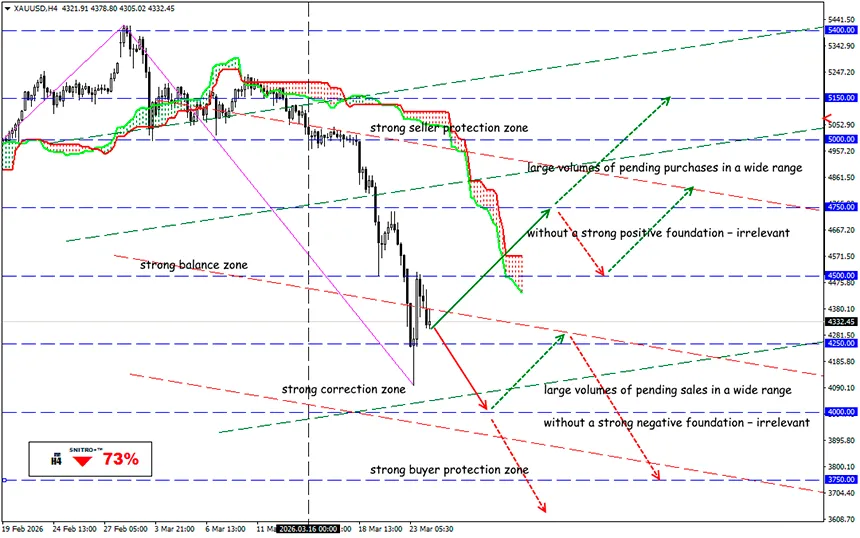
Precious metals got scared of inflation
XAU/USD
Key zone: 4,250.00 - 4,500.00
Buy: 4,500.00 (on strong positive fundamentals); target 4,750.00; StopLoss 4,430.00
Sell: 4,200.00 (on a confident breakout of 4,250); target 3,850-3,700; StopLoss 4,270.00
The historical status of a “safe haven” is no longer enough to support prices of precious metals. Prices of gold, silver and platinum have been declining for ten consecutive sessions amid growing concerns about inflation due to the Middle East conflict. The risks of a Fed rate hike are gradually being reinforced by external factors.
Reminder:
Gold is denominated in USD, which means the stronger the US currency is, the more expensive gold becomes for the rest of the world and the weaker the demand. In periods of risk-off sentiment, investors prefer dollar cash as the closest alternative.
For the first time in 10 years, gold is facing liquidity problems: the sharp decline in prices is caused by the need of investors to raise cash, and in the case of an escalation of the war the market value of precious metals will continue to fall.
- This is understandable — the high liquidity of gold in a period when risks are declining has a negative impact on its value. An additional factor is profit-taking after a multi-month rally — investors are closing gold positions to cover margin requirements on other assets.
- The fundamental pressure factor remains the growth of inflation expectations and the weakening of the chances of Fed policy easing in the near future. This negatively affects gold and silver: neither of these assets generates coupon income, therefore both become less attractive when bond yields rise and hopes for rate cuts weaken.
- Instead of investing in precious metals, investors are increasingly moving into income-generating instruments, as rising energy prices are strengthening expectations of tighter monetary policy.
The scale of the gold sell-off is not record-breaking yet, but the speed of the price decline is significantly higher than in many historical cases.
In addition, the Middle East is a major financial “gold hub”. For example, the UAE acts as a major hub for refining and logistics of precious metals to Asia — already at the beginning of March physical gold in Dubai was sold at a discount of up to $30 per ounce relative to the London LBMA benchmark due to flight cancellations and logistical disruptions.
The military conflict has completely destroyed this price-stabilization system for both physical and exchange-traded gold.
And what is the result?
Gold futures are struggling to break higher amid strengthening downward dynamics across all timeframes.
At the moment, the speculative decline in oil prices has caused only a technical correction — the bearish trend is not breaking yet. During Tuesday trading the markets are ignoring Trump’s refusal to threaten to “destroy” Iran’s power plants, perceiving it as another example of his signature TACO policy (Trump Always Chickens Out). Risk-off capital flows are becoming relevant again.
But in the long term, taking into account the upcoming fiscal problems in the world, declining trust in fiat currencies and global instability, we would keep bets on gold growth relevant.
Structural demand is expected, especially from central banks of emerging markets seeking to diversify reserves, to provide a price floor for spot gold in the $3750–3500 zone. However, a careful fundamental analysis of the current situation is mandatory.
So we act wisely and avoid unnecessary risks.
Profits to y’all!


