



Caracas in a debt abyss

How venezuela will repay its debts
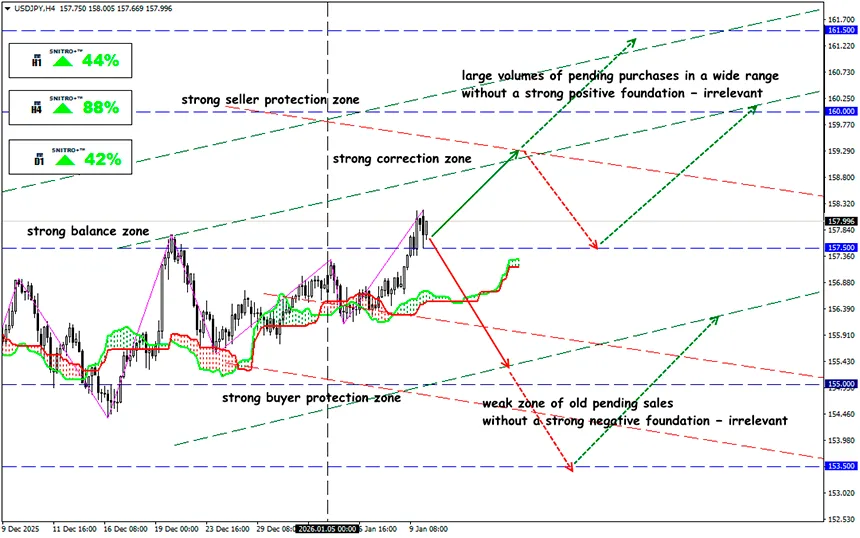
USD/JPY
Key zone: 157.00 - 158.50
Buy: 158.80 (on a confident breakout of the 158.50 level) ; target 160.50-161.00; StopLoss 158.20
Sell: 157.00 (on a pullback after retesting the 158.00 level) ; target 155.50-155.00; StopLoss 157.70
After the removal of Nicolás Maduro from power, Venezuela received a chance to end a decade-long financial default. Previously, U.S. sanctions prevented the country from issuing even the most basic bonds. Now Venezuela faces the most complex sovereign debt restructuring since Greece’s default, which shook the eurozone in 2012.
Nevertheless, creditors have so far failed to reach any agreement with the United States, as Trump blocks any negotiations, declares the absolute transfer of rights to use Venezuelan oil to the U.S., and is willing to discuss only debts owed to American companies.
The situation is further complicated by the uncertain prospects of the transition period under interim president Delcy Rodríguez.
Debt size: who is owed and how much
- The Maduro regime has long stopped publishing any reliable statistics. Estimates of current external debt start at $150 bn and higher. This is at least twice the size of the country’s devastated economy.
- Prior to the 2017 default, Beijing provided Caracas with tens of billions of dollars in loans, mainly through the China Development Bank (CDB), with repayment planned via oil deliveries. The last CDB tranche was issued in 2018. Outstanding loans are estimated at $15 bn, but the data is opaque, so the actual figure is likely several times higher.
- Debt to holders of bonds issued by the government and state oil company PDVSA, with principal of around $60 bn, is accompanied by more than $100 bn in unpaid interest.
- Claims related to international arbitration rulings involving companies whose assets were expropriated by the Venezuelan government (ConocoPhillips, ExxonMobil, and gold-mining companies) are estimated at $20 bn.
At present, creditors are actively organizing and seeking intermediaries. One group, the Venezuela Creditors Committee, represents a significant share of bonds held by major investors, including Fidelity, GMO, Morgan Stanley Investment Management, and VR Capital. In 2023, this committee secured an agreement to extend the statute of limitations for claims on defaulted bonds in U.S. courts until 2028, but under Trump all agreements have been canceled, and no new ones are in sight.
How much will creditors recover?
To reduce Venezuela’s public debt to at least 80% of GDP, bondholders will have to accept principal losses of no less than 50%. Even so, this outlook appears more optimistic than, for example, Argentina, where creditors considered it a success to recover 30% of the debt.
Regardless of what percentage creditors expect to recover (25, 50, or more cents on the dollar), the final payout will depend on the state of Venezuela’s economy. To revive the national oil industry, global prices of around $80 per barrel are required to reach breakeven. The current level of market prices is a catastrophe for Venezuela, regardless of who sells the oil.
The U.S. plans to “liquidate” all creditors (legally!) in order to provide Venezuela with a clean economic slate. As an example, the restructuring of Iraq’s $130 bn debt is cited, where creditor losses exceeded 80%.
Creditors expect a restructuring of bonds and bilateral loans under which repayments will be linked to the recovery of oil production. Major oil companies are willing to convert arbitration claims into equity participation in field development. However, negotiations will have to be conducted personally with Trump.
Given that accrued unpaid interest now amounts to 60–70% or more of the nominal value of Venezuelan bonds, some U.S. investors argue this could result in recoveries of 60 cents or more. But this is an overly optimistic scenario — there is no fundamental basis for it.
For now, one thing is clear: neither oil nor potential gold production will save Venezuela.
So we act wisely and avoid unnecessary risks.
Profits to y’all!


