


















The pound does not lose optimism
British politics is putting pressure on the currency
GBP/JPY
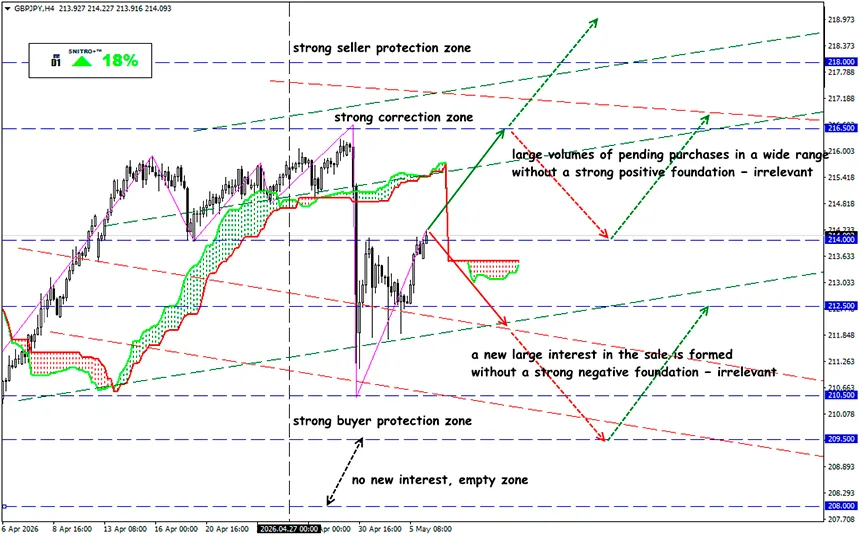
Key zone: 213.50- 214.50
Buy: 214.50 (after retesting the 214.00 level); target 216.50-218.00; StopLoss 214.00
Sell: 213.00 (on strong negative fundamentals) ; target 211.50-210.00; StopLoss 213.50
Labour risks losing local elections due to the significantly weakened approval rating of Keir Starmer. Despite selling pressure in the UK bond markets, the pound shows stable dynamics, as the market does not always link these developments to political risks.
- The market is concerned about high uncertainty ahead of the next Bank of England meeting, so economic data will play a key role in determining the future direction of the pound.
- The situation is driving increased volatility, and if political conflicts intensify following the elections, the royal currency will have to decline.
- The escalation of the Middle East conflict has renewed investor interest in the US dollar as a safe-haven asset. At the same time, oil prices have risen along with the risks of accelerating US inflation. To combat this, the Federal Reserve may raise rates this year, with the probability increasing from 11% to 32%.
- Europe is facing a stagflation shock, as high energy prices are pushing the region toward higher inflation and slower GDP growth.
Recall:
Following its April 30 meeting, the Bank of England kept the interest rate unchanged at 3.75%, as expected. The decision was made by a majority vote of 8 to 1, with Chief Economist Pill voting in favor of a hike.
In its monetary policy report, the regulator outlined three scenarios—none of which assumes a direct recession, suggesting that the Bank of England is not ready to fully acknowledge all stated risks, namely inflation and recession.
In other words, it is too early to expect a rate hike, meaning there is currently no driver for pound growth from this side. It may appear next week when NIESR provides its estimate of GDP growth for April, which will clarify how the economic situation aligns with the relatively positive PMI data.
From the perspective of the GBP/JPY cross, note the following.
According to International Monetary Fund principles, Japan can conduct no more than two three-day currency interventions within six months if it wants to retain its status as a country with a freely floating exchange rate. These comments came after the yen surged sharply last Thursday amid reports of intervention, followed by a series of intraday rallies. The strengthening of the yen highlights the fragility of short positions.
Under the rules, three days of intervention last week are considered a single market operation. This means Japan can afford a new currency intervention.
Japan’s Finance Minister Satsuki Katayama stated on Monday that authorities may take decisive action against speculative currency fluctuations in line with the agreement between the US and Japan. Officials added that interventions are counted even if Japan is on a public holiday while global markets remain open.
According to Bloomberg data, options traders still estimate the probability of the yen falling again to ¥160 by the end of June at around 52%.
The question is whether the Bank of Japan will be forced to return to active measures, but the decision threshold always appears higher in conditions where the main driver remains an active war, including at the monetary level.
So we act wisely and avoid unnecessary risks.
Profits to y’all!


